"Our trip to Vesuvius and Pompeii was truly unforgettable, and a huge part of that was thanks to our amazing guide, Magdalena, and our excellent driver. Magdalena was incredibly knowledgeable, passionate, and engaging. She brought the history of Pompeii and Mount Vesuvius to life with fascinating stories and insights, making every moment interesting and enjoyable. She was also kind, patient, and always happy to answer questions, creating a wonderful atmosphere throughout the day. A special thank you also goes to our driver, who made the journey smooth, safe, and comfortable. Navigating the busy roads with such professionalism allowed everyone to relax and fully enjoy the experience. I highly recommend this tour to anyone visiting the area. With Magdalena’s expertise and the driver’s excellent service, it was a perfect day and one of the highlights of our trip to Italy. Thank you both for such a memorable experience!"
The Ruins and the Volcano · Two Timed Entries · One Day
Pompeii and Vesuvius Tour
Pompeii is a walk. Vesuvius is a climb — loose ash and lapilli, a real fitness floor, and a crater path the park shuts automatically the moment Campania issues an orange weather alert. Putting both in one day means running two ticketed clocks at once, and almost no listing says so.
- 4.8 / 5 7969+ Reviews
- 1,000 m Where the Road Stops
- Both Tickets Pompeii + Vesuvius Park
- Free Cancellation
The Experience
What the From-Naples Day Trip Includes
Lifted from the operator's own listing — the air-conditioned coach, a guide at each site, the pizza lunch between them, and both entry tickets including the €11.68 Vesuvius park fee.
Highlights
- Experience 2000 years of history when you visit Pompeii
- Enjoy a full immersive experience as you explore the ruins left by the explosion
- Reach the top of the Mount Vesuvius, which destroyed the town nearly in 79 AD
- Join a small group tour
What's Included
- Transportation by air-conditioned bus
- Tour guide
- Live commentary on board
- Lunch (pizza and soft drinks)
- Pompeii entry ticket
- Vesuvius National Park entry ticket (€11.68 p.p.)
How a Pompeii-and-Vesuvius Day Actually Runs
Four moving parts, two of which carry their own clock: the timed crater slot, the road that stops at 1,000 m, lunch, and Pompeii's named-ticket entry.
Meet at Piazza Garibaldi, Not Your Hotel
The featured day trip starts at the entrance of the Starhotels Terminus on Piazza Giuseppe Garibaldi, directly opposite Napoli Centrale, where a tour leader meets you. There is no hotel pickup on this departure — the pricier small-group versions collect from up to twelve points around Naples, including the Stazione Marittima cruise terminal. Bring a passport or ID card: the operator asks for one on the day, and EU under-25s need it to claim the reduced Pompeii rate.
Vesuvius First — the Road Stops at 1,000 m
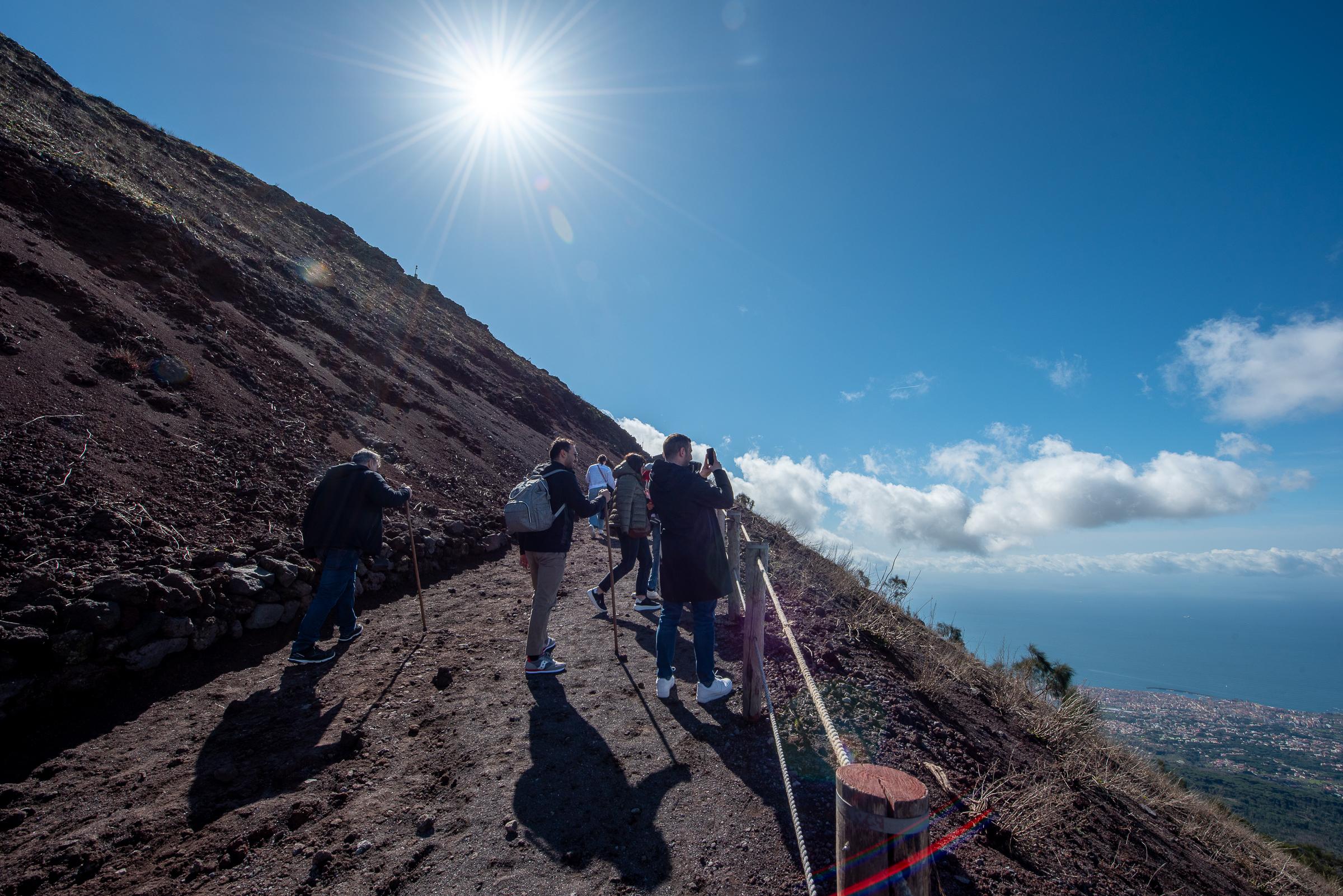
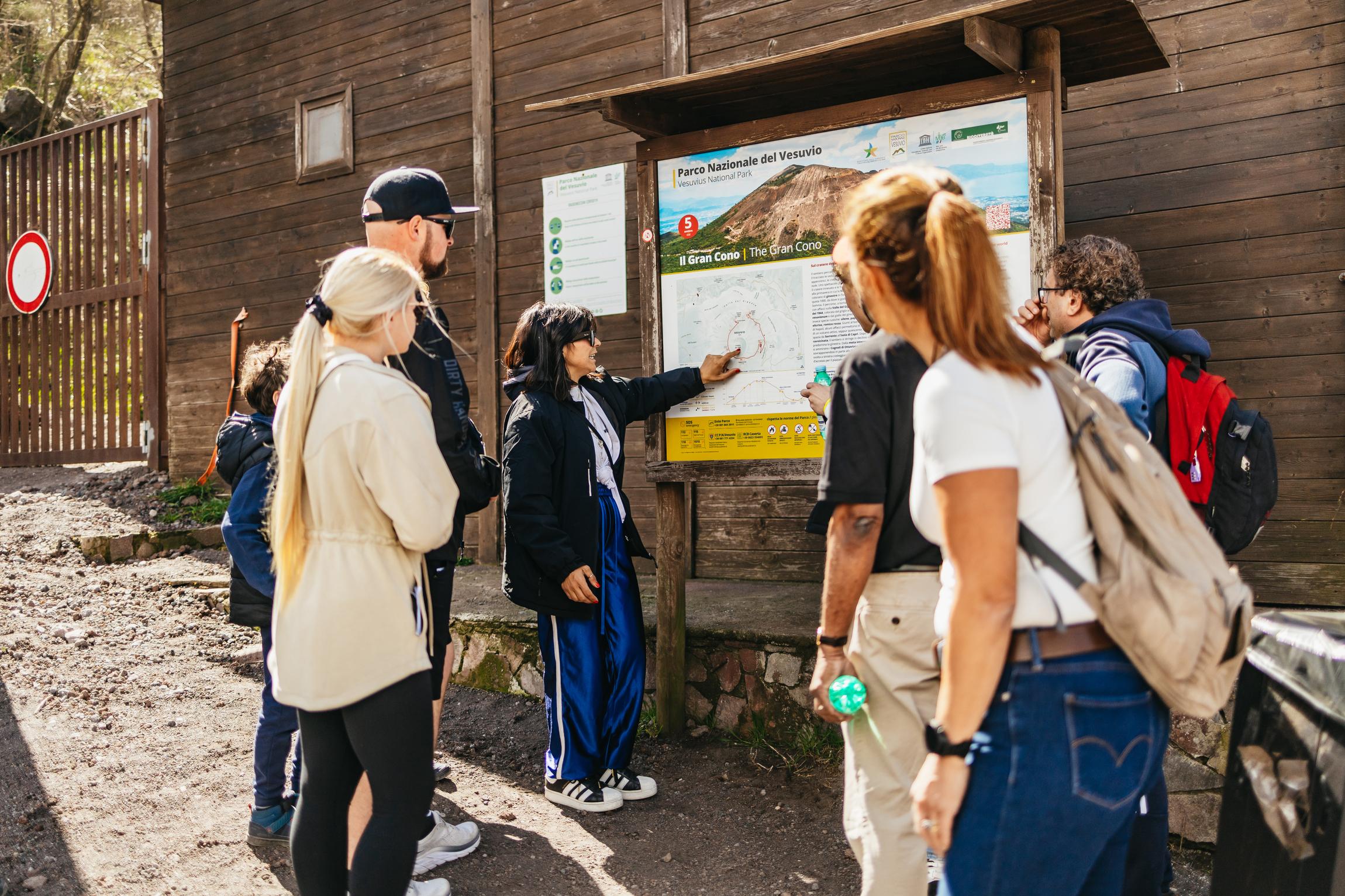
The coach climbs to the Piazzale di Quota 1000 and stops; private cars are not allowed to park there at all. From the turnstiles it is your own legs on Sentiero n. 5, and you are put into a group of twenty with a Presidio Permanente Vulcano Vesuvio guide — that escort is compulsory above 1,000 metres under Campania regional law and is already inside the ticket price. One operator puts the ascent at about a mile at a 14-degree angle, roughly 20 minutes; the park's own trail sheet says 4,010 m there and back and two and a half hours. The featured tour allows 1.5 hours for the whole stop.
Lunch on the Slopes, Then Thirty Minutes Down
Lunch — pizza and a soft drink — is included on the featured departure and takes about 45 minutes at a restaurant on the volcano's flank. Then it is roughly half an hour of switchbacks back down to the plain. If anyone in the party gets carsick, this is the stretch to take something for: reviewers of the coast departures single out the descent rather than the climb.
Two Guided Hours Inside Pompeii
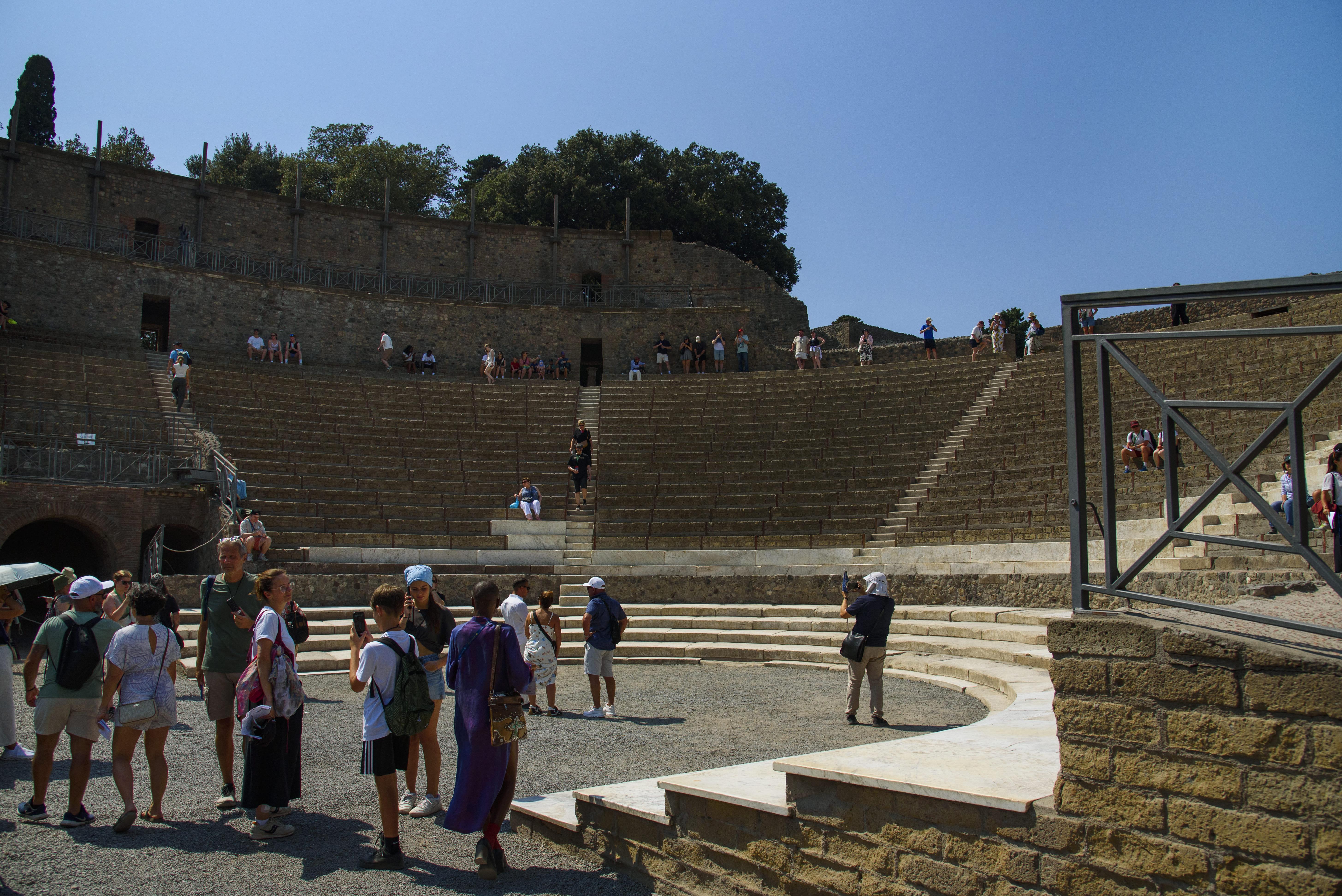
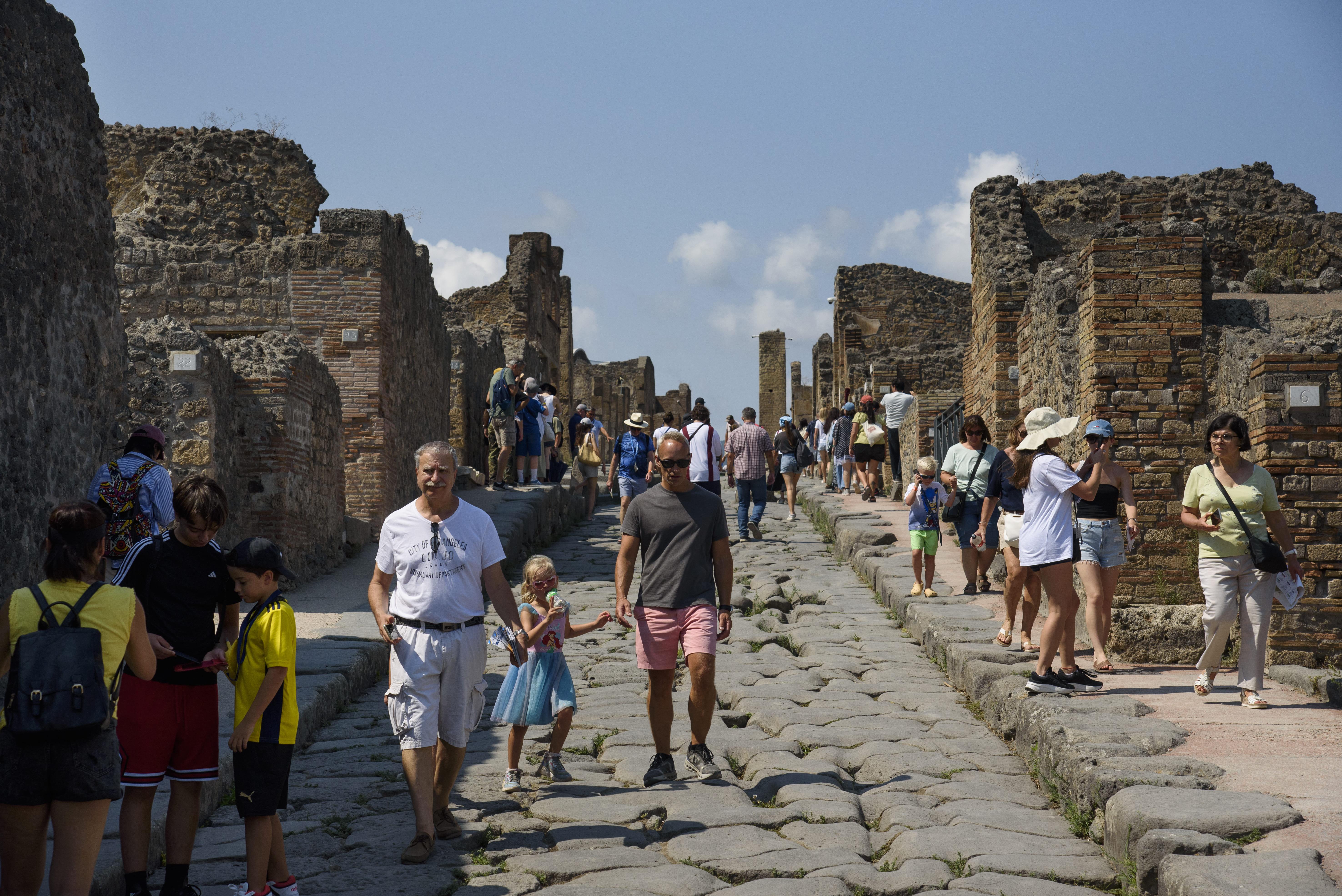
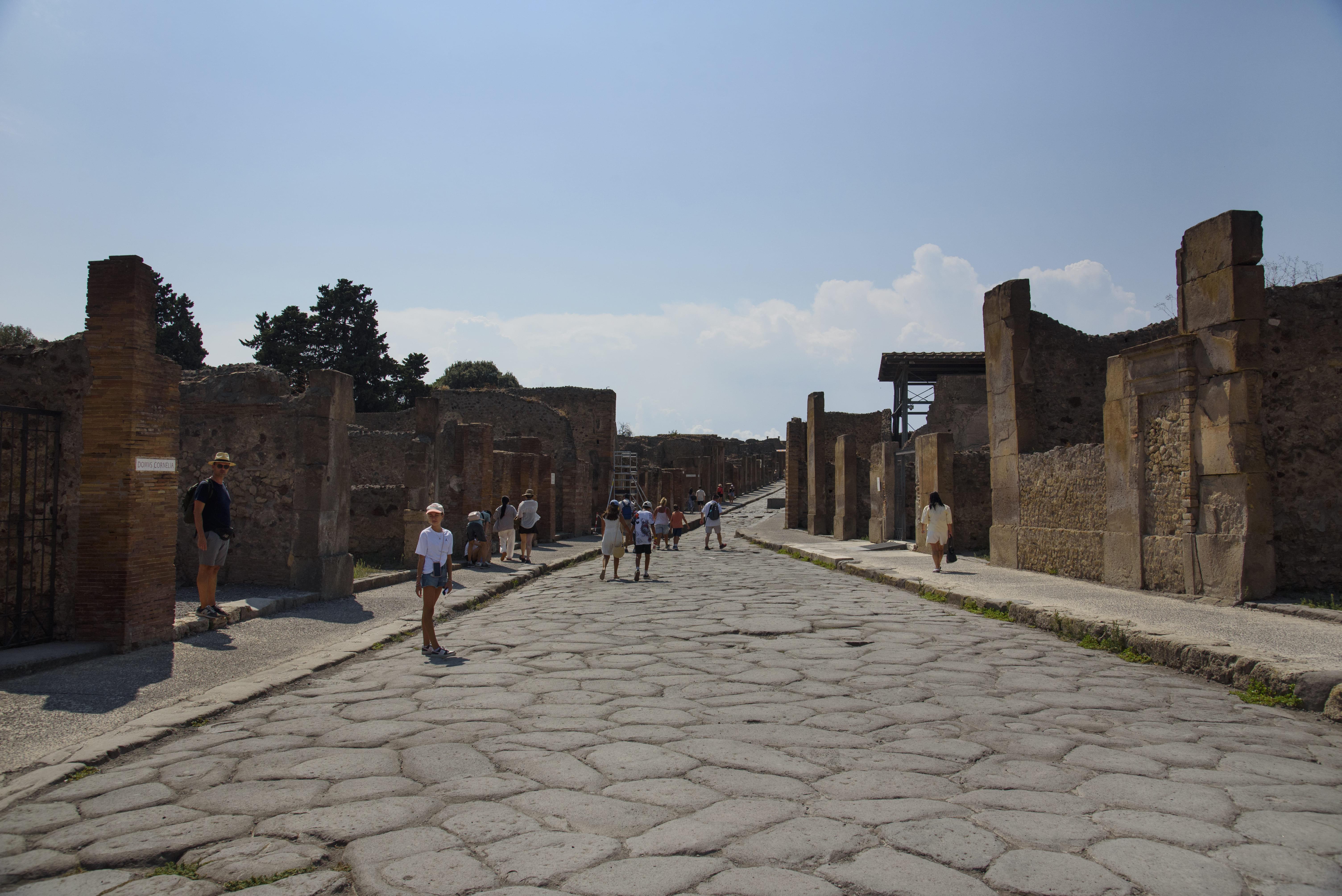
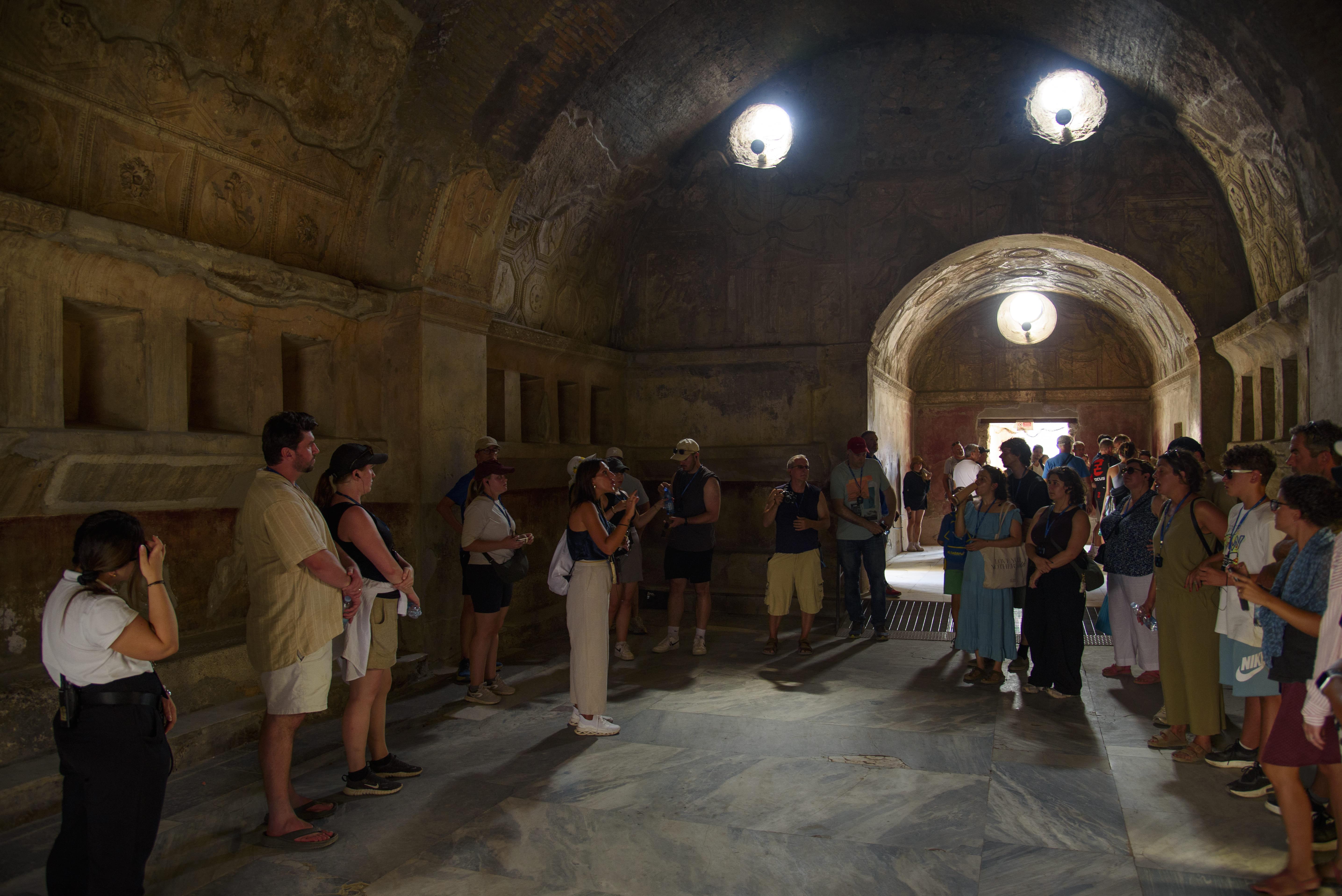
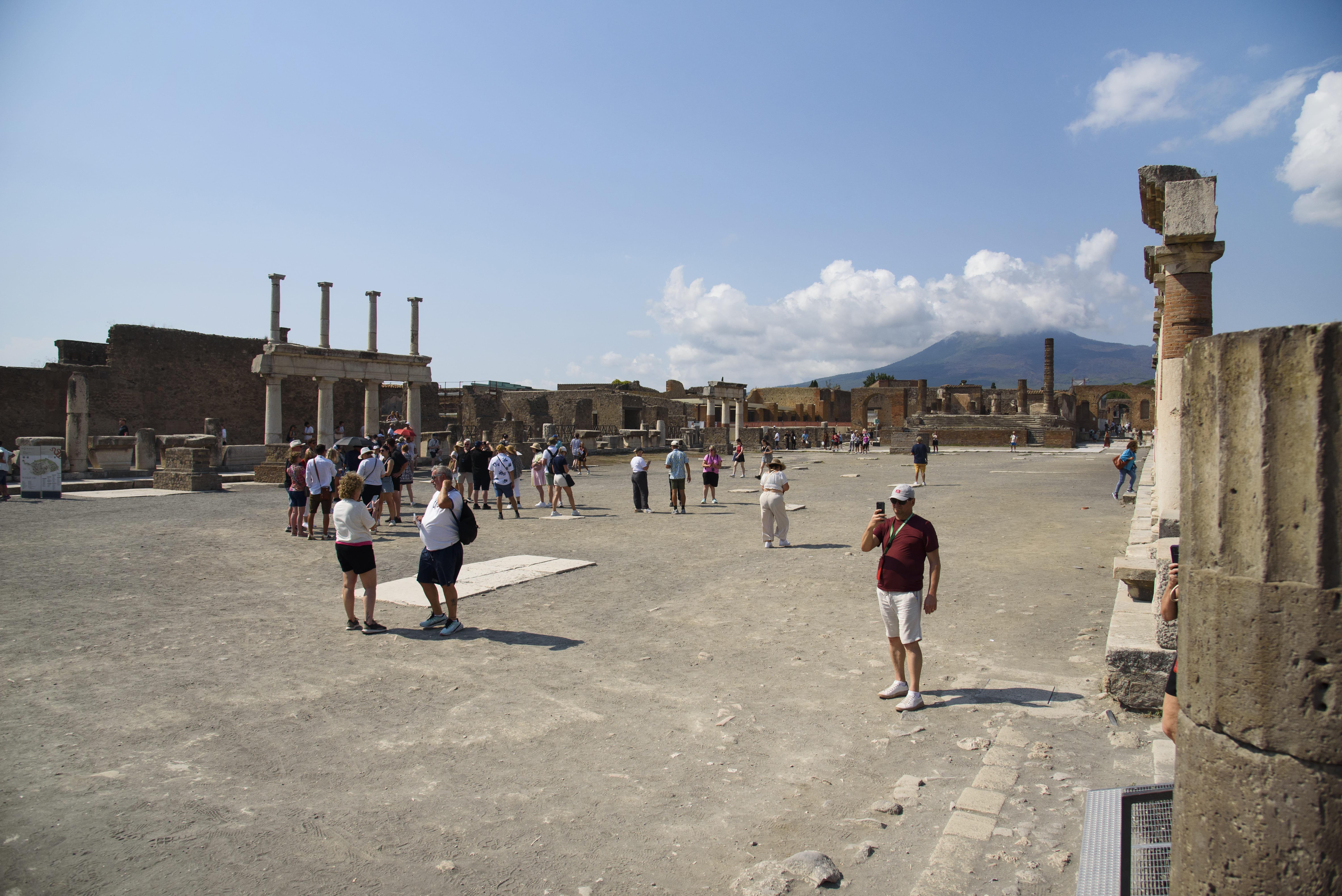
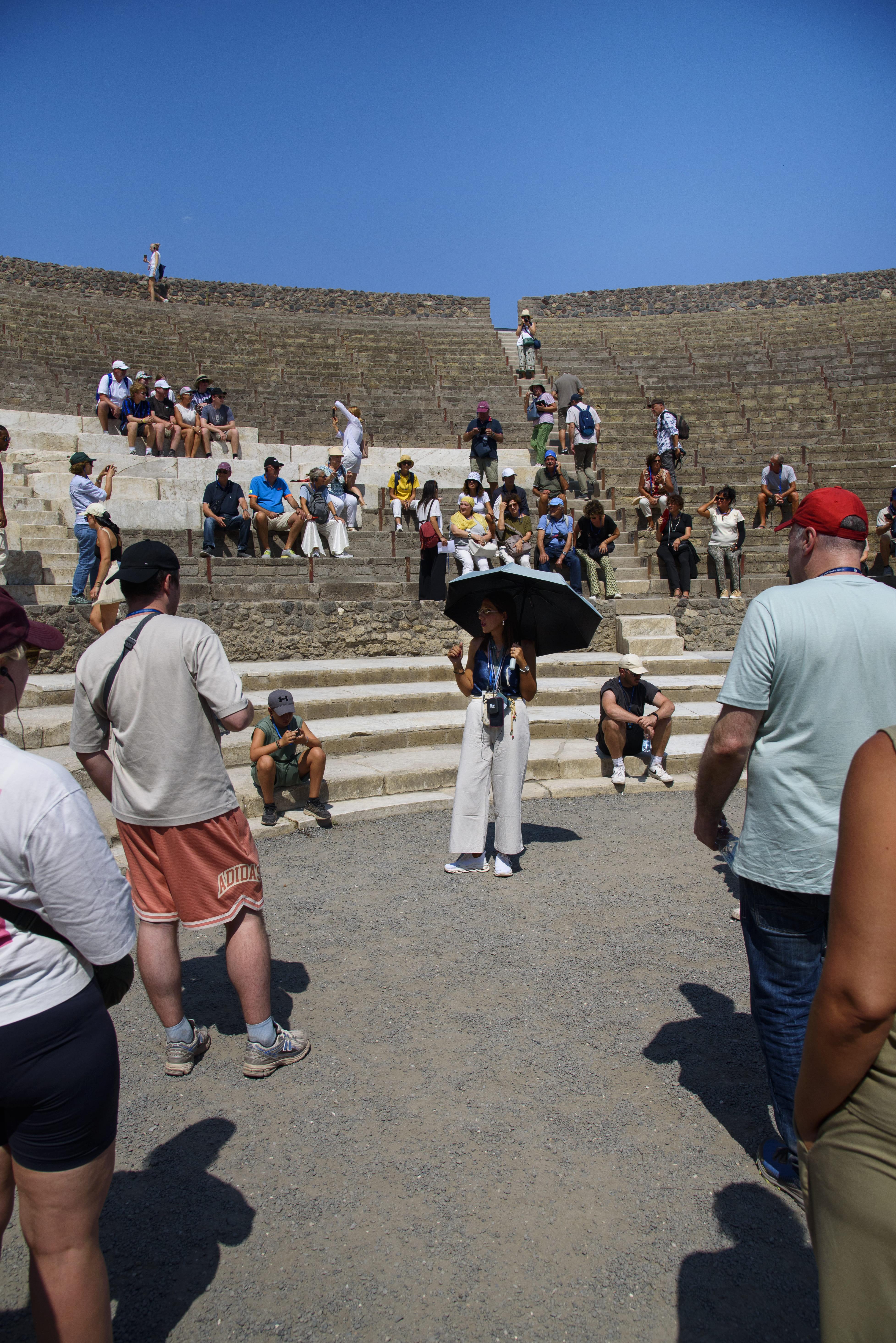
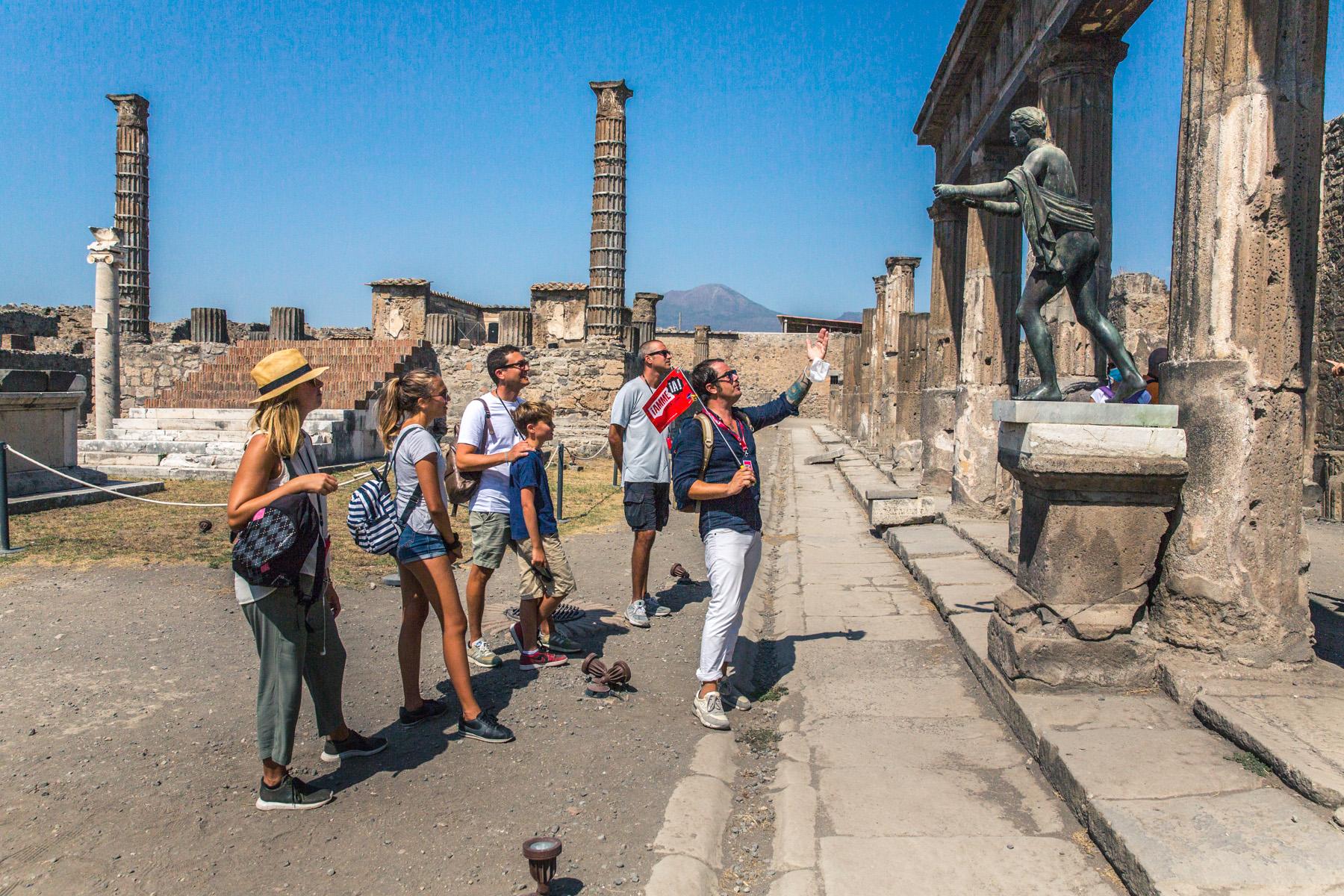
A local guide walks the spine of the ancient city for two hours — the Forum, the Stabian Baths, a thermopolium counter, the Lupanar, the frescoed houses and the casts. Two hours is roughly a fifth of what Pompeii can absorb, and reviewers say so repeatedly and cheerfully; treat it as an introduction with a return visit implied. The coach then returns you to the same square it collected you from.
Photo Gallery
The Crater and the City — Through the Lens
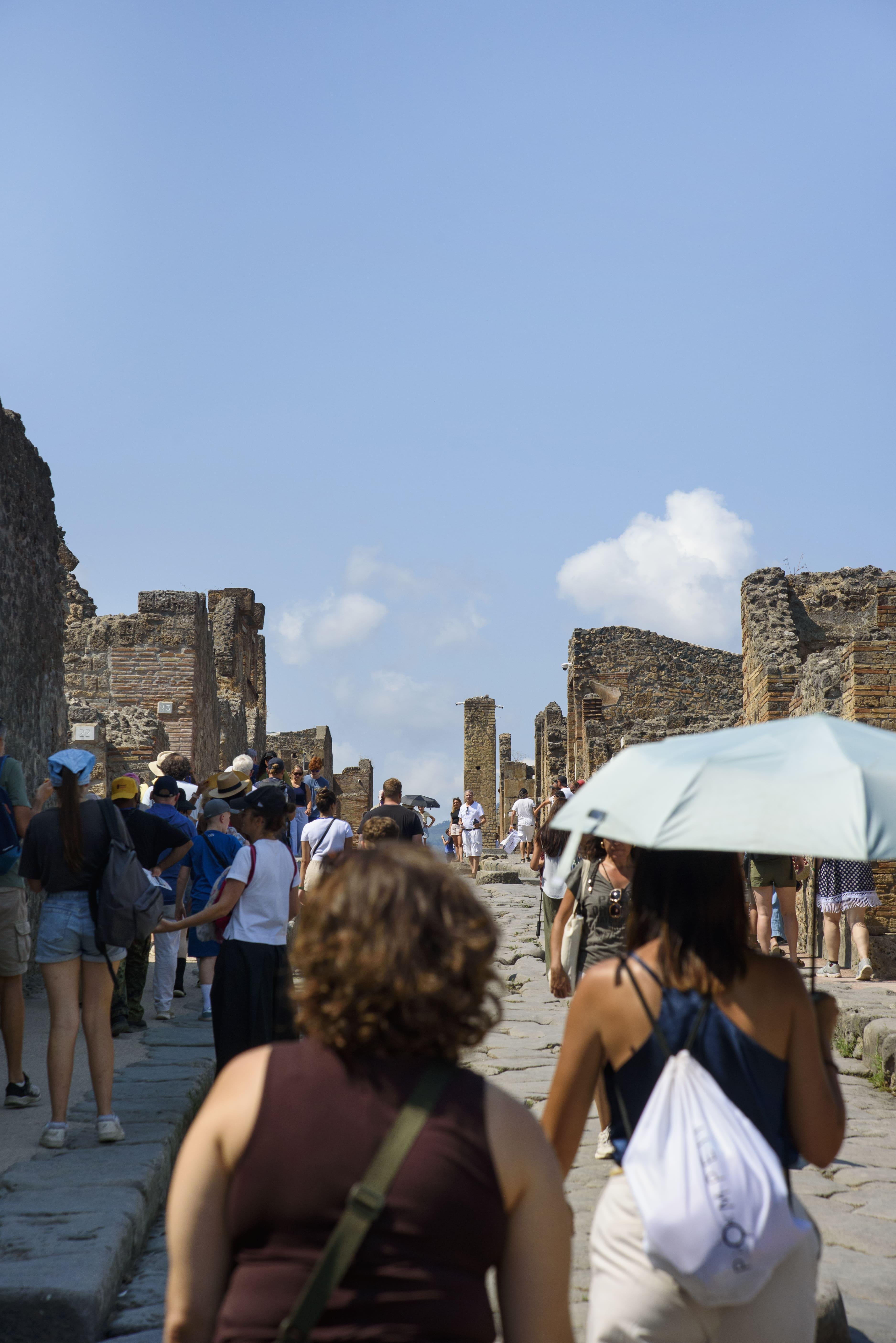
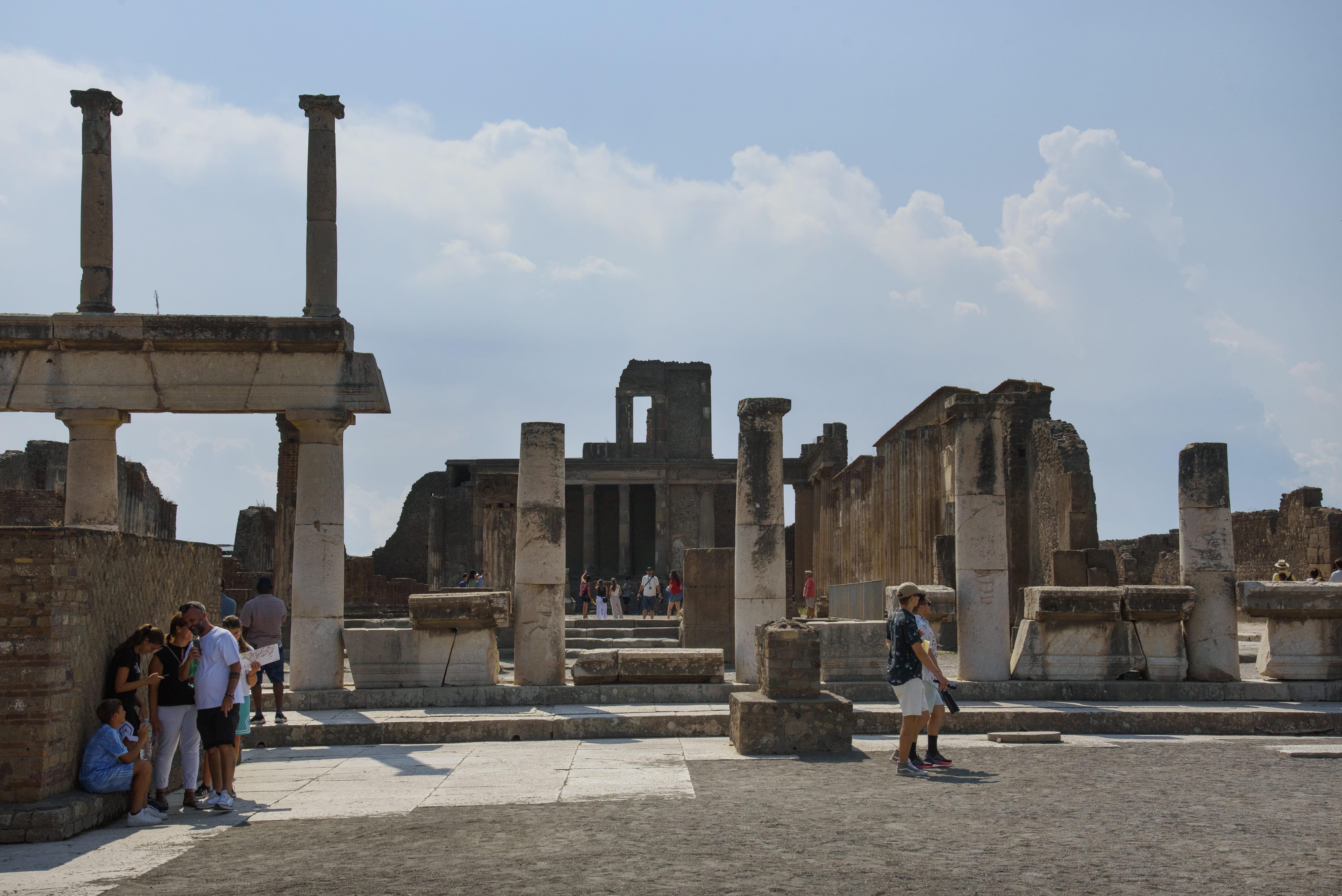
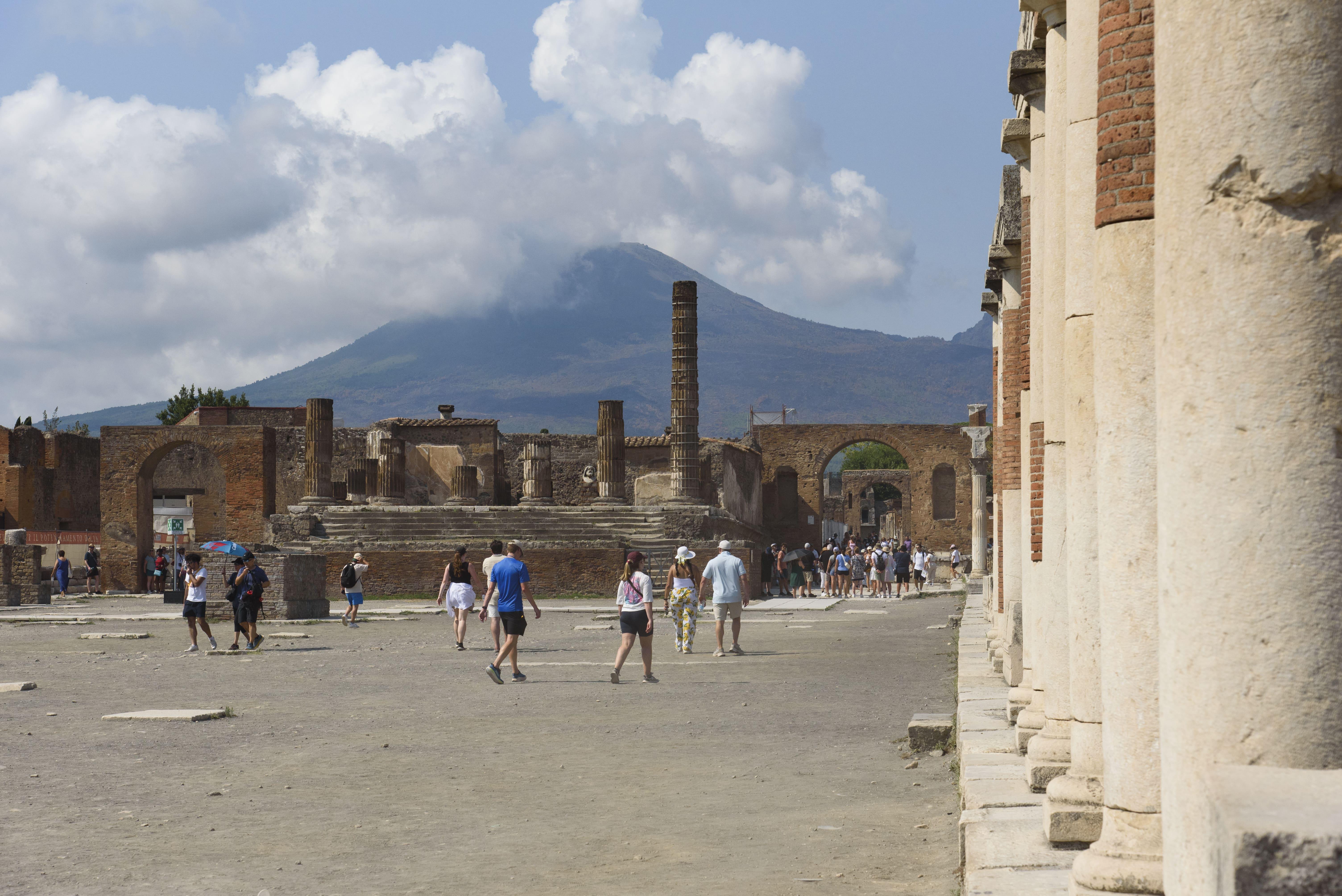
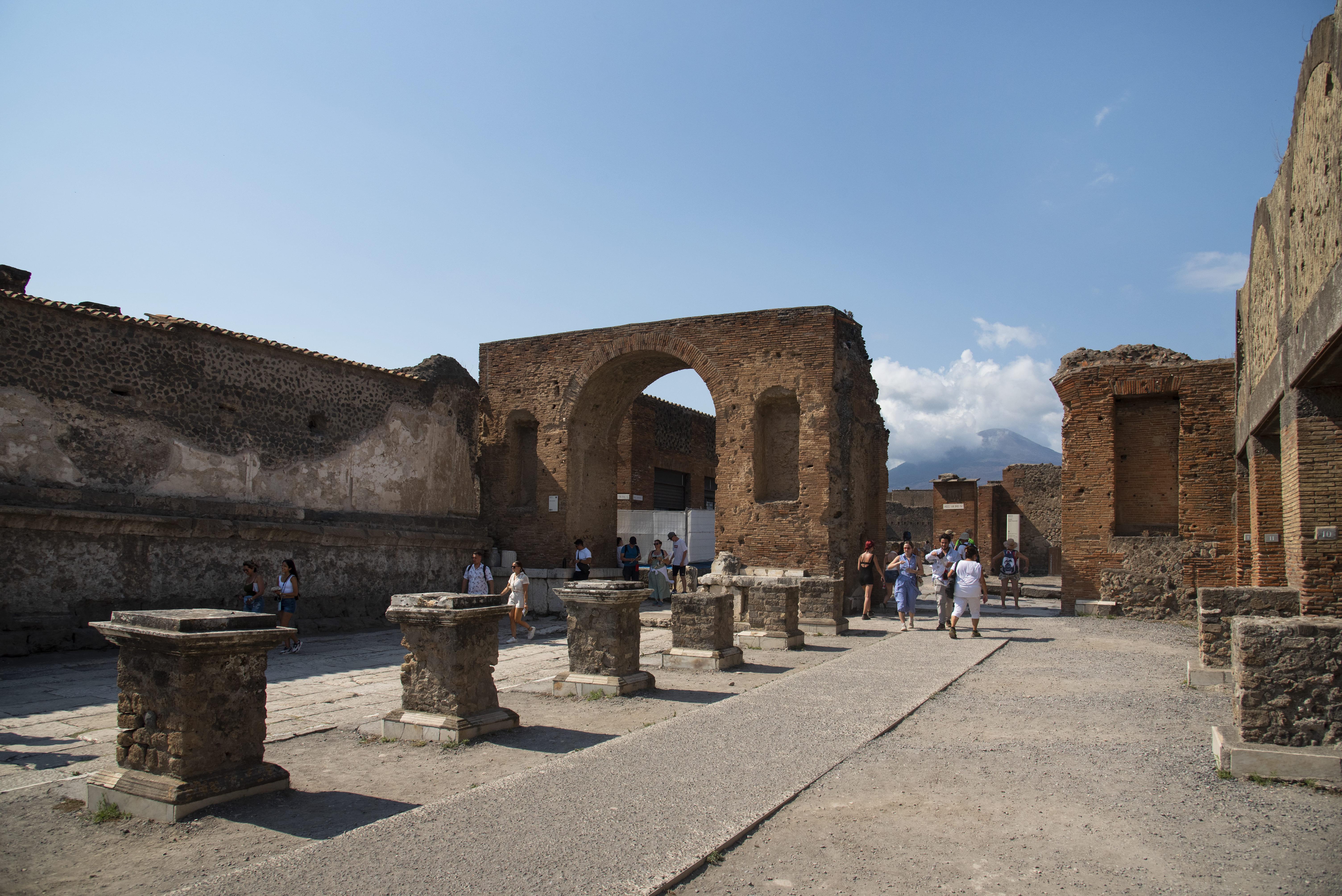
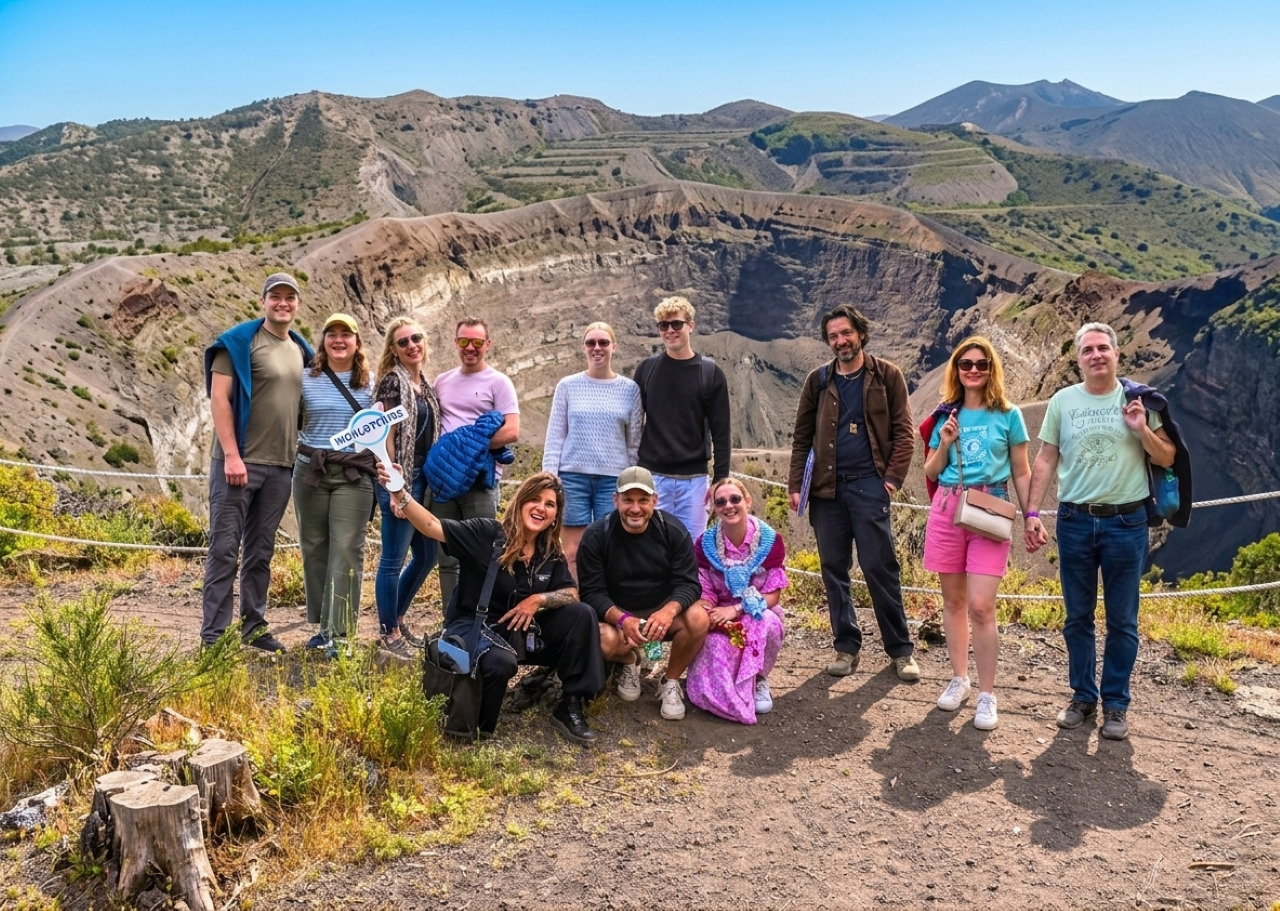
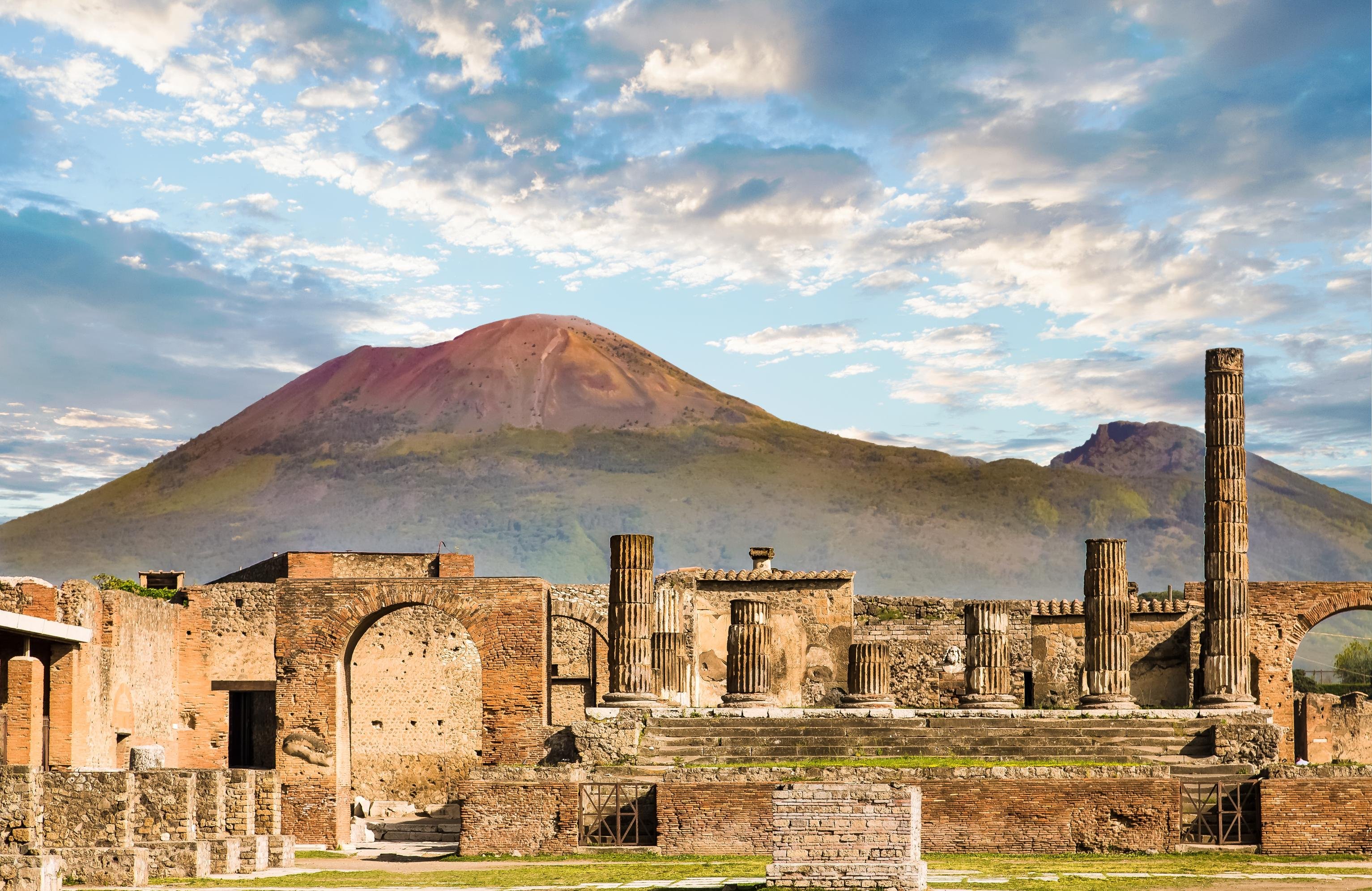
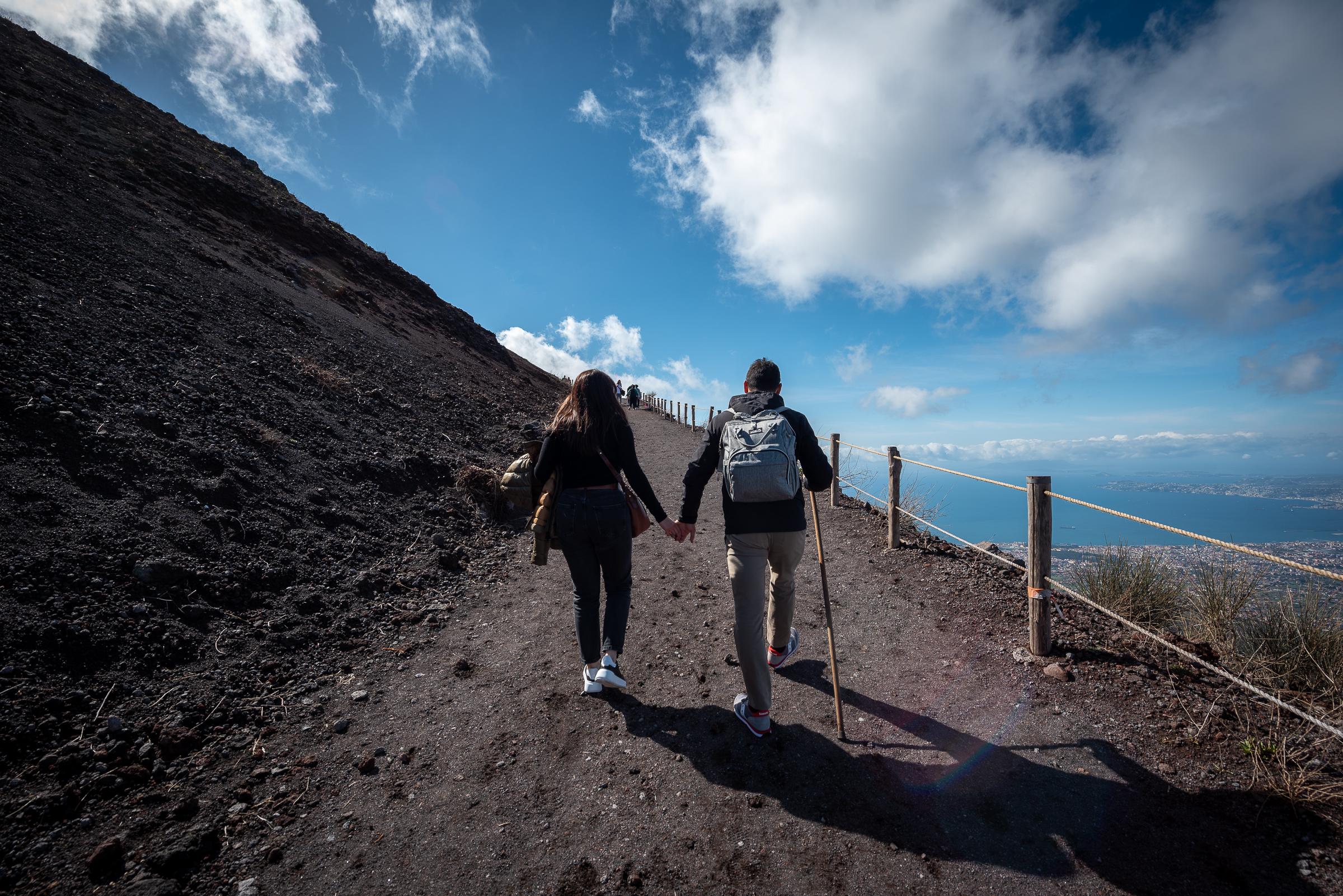
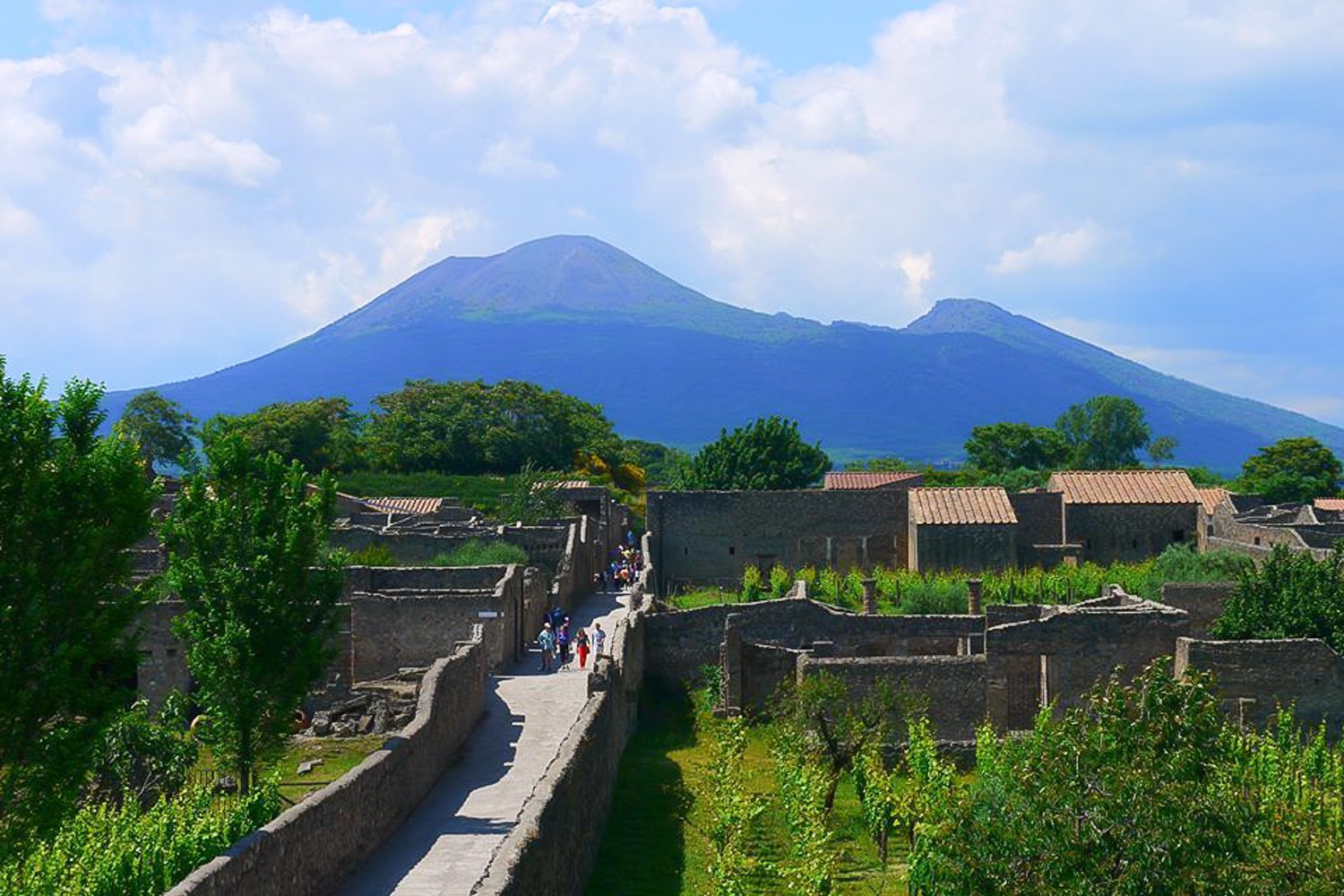
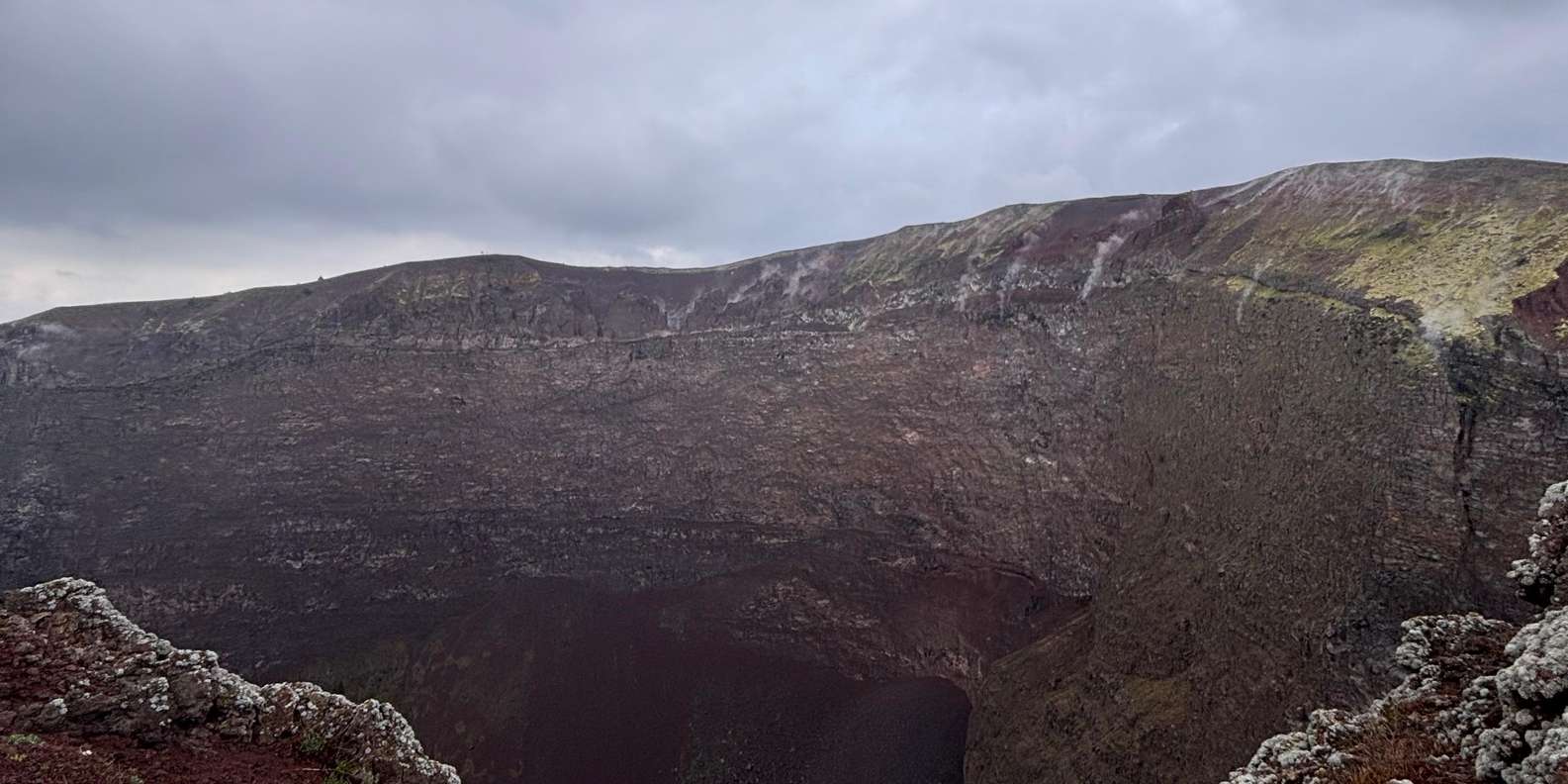
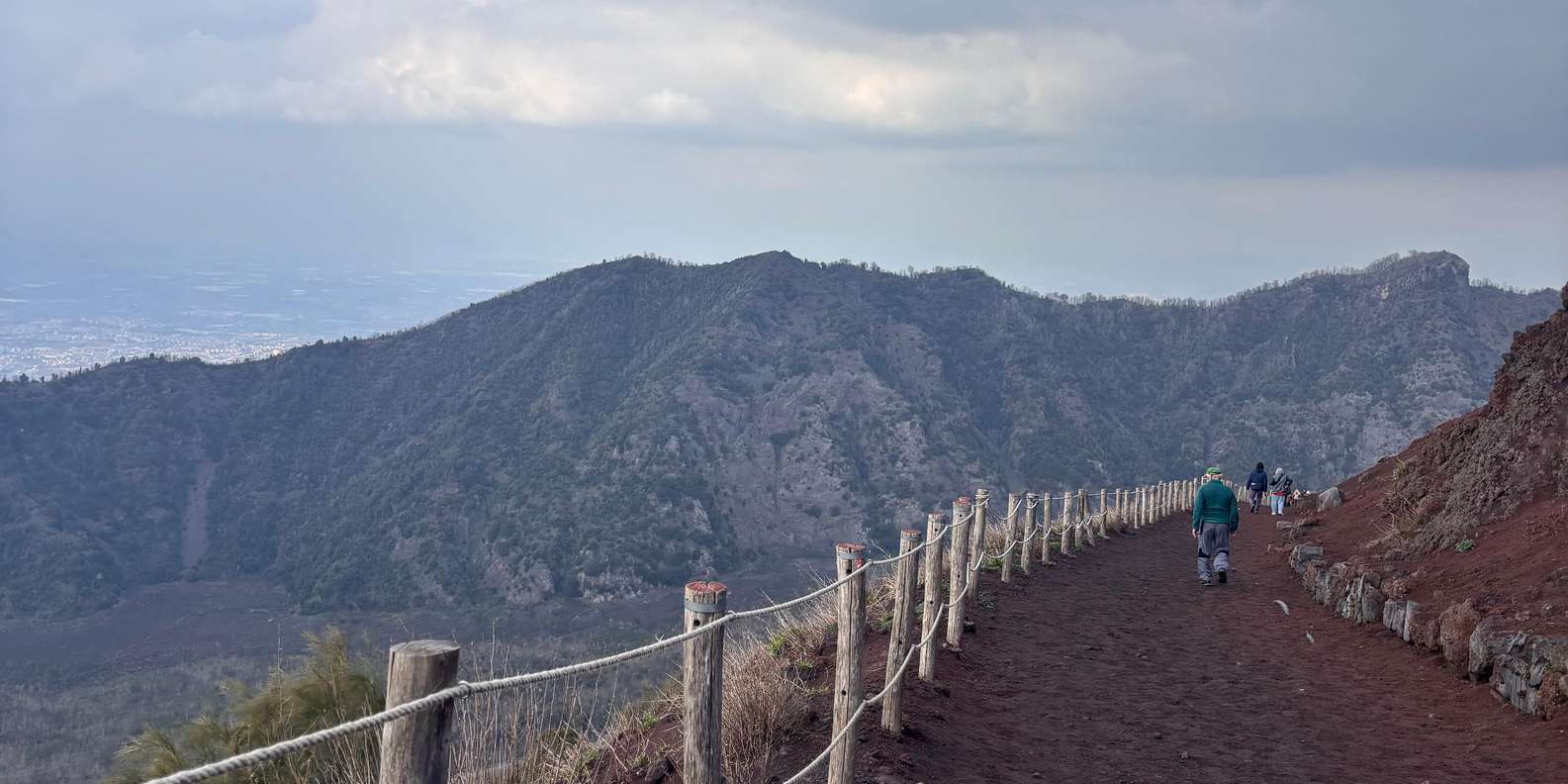
The Gran Cono rim above the Bay of Naples, the gravel switchbacks up to it, and the roofless streets of Pompeii under the mountain that buried them.

Book Your Experience
Check Availability & Prices
Select your preferred date and time. Instant confirmation — free cancellation up to 24 hours before departure.
Three Ways to Do Both — and Only Two of Them Include the Crater
The $61 coach is the cheapest full day anyone sells. The $90 small group buys you a choice of trail and a sit-down lunch. The Rome day sells Vesuvius as a paid extra, which is the row most people miss. Read the third row before the price row.
| Feature | CHEAPEST FULL DAY The $61 Coach From Naples | Small Group From Naples | The Day Trip From Rome |
|---|---|---|---|
| Starting Price | From $61/per person | From $90.18 per person, both tickets, priority access and a sit-down lunch | From $79.57 per person — but that is the Pompeii-only day |
| Rating and Review Depth | 4.8 / 5 from 7,969 verified guests — the deepest sample in the niche | 4.7 / 5 from 3,265 verified guests | 4.6 / 5 from 5,671 verified guests |
| Is the Crater Included? | Yes. The €11.68 Vesuvius park ticket is named in the inclusions | Yes, and you choose the trail: the crater rim, or a speleologist-led trek through the lava caves that does NOT reach the summit | No. Vesuvius is an optional paid upgrade — the listing prices the park ticket separately at €10 plus a €1.68 reservation fee |
| Time on the Volcano | 1.5 hours for the whole stop, walk included | 2 hours at Mount Vesuvius | Only if you take the upgrade; the coach stops there for roughly 45 minutes of driving plus the walk |
| Time Inside Pompeii | 2 guided hours — the Forum, the Stabian Baths, a thermopolium and the Lupanar | 2 guided hours with a professional archaeologist, priority entry | 2 guided hours with a licensed archaeologist, skip-the-line entry |
| Where You Meet | Starhotels Terminus, Piazza Garibaldi, opposite Napoli Centrale. No hotel pickup | Up to 12 pickup points across Naples, including the Stazione Marittima cruise terminal | Central Rome. Roughly three hours each way by coach, with a break at Cassino |
| Food | Pizza and a soft drink, 45 minutes, on the slopes | A traditional sit-down Italian lunch, 1 hour | A three-course lunch only if you select that option |
| If the Crater Is Closed | The operator substitutes an alternative; guests report being taken elsewhere rather than refunded | The listing warns the Pompeii and Vesuvius order may be reversed for weather or extreme heat | The listing states plainly that Sorrento is substituted for the crater in bad weather or strikes |
| Best For | Anyone who wants both sites done properly for the least money, and does not mind a full coach | Travellers who want a smaller group, a real lunch, a cruise-terminal pickup, or the lava caves | People who cannot move base — and who understand they are buying a twelve-hour day for one guaranteed site |
| Check Availability | See the Small Group | See the Rome Day |
More Options
Every Other Way to Do Pompeii and Vesuvius
Different origins, different baskets — from the $61 coach out of Naples Centrale to the $293 winery day from the Amalfi Coast. All with free cancellation and instant confirmation.
 FROM NAPLES
Exclusive Pompeii & Vesuvius Tour with Lunch from Naples - 2026 (Verified Reviews)
Witness the dual souls of Campania in one unforgettable day. Leave Naples behind in a comfortable, air-conditioned vehicle and prepare to step back in time. This …
 FROM ROME
From Rome: Pompeii Day Trip with Optional Vesuvius and Lunch - 2026 (Verified Reviews)
Immerse yourself in ancient Italy on a stress-free day trip from Rome to Pompeii. Travel by air-conditioned private bus with an English-speaking tour leader for a …
 FROM SORRENTO
From Sorrento: Pompeii and Vesuvius Guided Tour with Lunch - 2026 (Verified Reviews)
Your tour kicks off at the entrance of Parcheggio Comunale Achille Lauro in Sorrento, where your tour leader will greet you. Head to your first stop at Mount …
 FROM THE AMALFI COAST
Pompeii and Vesuvius Full-Day Tour from Amalfi Coast - 2026 (Verified Reviews)
Discover the beauty of the Amalfi coast, climb Mount Vesuvius, and see the excavation site at Pompeii, all on one tour! Drive along the coastal road and pass the …
 EITHER ORIGIN
Naples or Sorrento: Full-Day Pompeii and Mt. Vesuvius Tour - 2026 (Verified Reviews)
Explore the world-famous Pompeii ruins and Mount Vesuvius on a guided day trip starting from Naples or Sorrento. Enjoy skip-the-line entry to Pompeii and admire the …
 LUNCH & WINE INCLUDED
All-Inclusive Pompeii & Vesuvius: Lunch & Wine from Naples - 2026 (Verified Reviews)
Your day begins with a smooth ride from Naples to Pompeii. Step back nearly 2,000 years as your expert guide brings the ruins to life. Walk the cobblestone streets, …
The Independent Guide
Two Sites, Two Tickets, Two Closing Times
Every listing sells this as one product. It is two — a roofless archaeological city on a named ticket, and a volcanic gravel path the park shuts automatically the moment Campania issues an orange weather alert.
Search pompeii and vesuvius tour and you get a wall of full-day coaches all promising the same thing: the buried city and the volcano that buried it, in one day, from about $61. Twenty-five of them are sold around the Bay of Naples, and twenty-two genuinely reach both.
What none of the titles tell you is that you are buying entry to two separately ticketed, separately timed, separately closable state sites — and that one of them is a walk and the other is a climb. Pompeii admits 20,000 people a day on named tickets split across two windows. Vesuvius lets sixty people through the turnstiles every ten minutes, sells its ticket online only, and closes the crater path automatically on any day the regional Civil Protection issues an orange weather alert. Those two systems do not talk to each other, and neither is under your tour operator’s control.
This page is about the half of the day that gets glossed over.
How hard the Vesuvius climb really is
Start here, because “moderate” is doing an enormous amount of work in these listings.
The walk is Sentiero n. 5, “Il Gran Cono”, and it begins at the Piazzale di Quota 1000, where the road stops. The Parco Nazionale del Vesuvio’s own trail sheet gives it as 4,010 metres there and back, two and a half hours, maximum altitude 1,175 m, and rates the difficulty “Bassa” — low.
Three things about that.
First, you do not reach the summit. Vesuvius is 1,281 m; the path tops out at 1,175 m. The upper rim on the northern and eastern flanks is legally interdicted to the public under the park’s own use protocol, open only to people the Ente Parco expressly authorises. You get a partial arc of the rim and a long look in. Anything promising you a walk around the crater is describing something that is not on sale.
Second, the park’s own numbers do not agree with the park’s own numbers. A second figure set circulates widely, including on park-adjacent pages: 3,807 m return, 1,170 m, about 140 m of vertical gain, 14% average gradient, difficulty “Media”, three hours. Simple arithmetic on the current sheet — 1,000 m at the gate, 1,175 m at the top — gives roughly 175 m of climb. We have printed both sets rather than blending them, because blending them is how the internet ends up quoting a number nobody published.
Third, the surface is the point. You are walking on the volcano’s own products — ash and lapilli, plus 1944 lava — on an unpaved track that the park itself describes as getting “leggermente più accidentato”, somewhat rougher, past the Capannuccia. Guests put it less diplomatically. One wrote of “lots of rocks and loose dirt, it gets very dirty with your shoes so wear the right sneakers”. Another, on the Positano departure, said it “tested my fitness but got to the top”. A third, travelling with an eleven-year-old, found “the walk is not challenging”. All three are describing the same path, which tells you the fitness floor is real but not high.
What is genuinely fixed: there is no shade above 1,000 m, and at the time of writing the Piazzale di Quota 1000 has no public toilets — the park says so itself and asks you to plan around it. Every combined tour in this data is marked unsuitable for wheelchair users, and several also exclude guests with heart conditions, back problems or recent surgery.
On footwear, be careful what you believe. The park’s published wording is a recommendation — “calzare scarpe adeguate”, wear adequate shoes. We could find no written rule anywhere refusing sandals, flip-flops or heels, on the park’s site or anyone else’s. Treat closed shoes with grip as strong advice about loose gravel, not as a dress code that will get you turned away.
The guide question, which the listings get wrong
Here is a discrepancy worth knowing before you pay a premium for a “volcanological guide”.
Above 1,000 metres, a guide is compulsory under Campania regional law, and it is the park that supplies one: the Presidio Permanente Vulcano Vesuvio forms visitors into groups of twenty at the gate and accompanies them, with the guided section starting at the Casetta at 1,118 m. That escort is already inside the €11.68 ticket. You cannot buy the crater without it.
Yet several tours sell a volcanological guide as a headline inclusion, and two of the biggest listings say the opposite in their own small print: “Your guide is not allowed in Vesuvius Park. You will need to climb and descend on your own,” followed by “official park alpine guides are not guaranteed.” Guests notice. One reviewer deducted a star because “the tour description said that the walk up to the Vesuvius crater would be with a licensed volcanological guide, but in fact it was unguided”. Another wrote plainly: “We didn’t get a vulcanologist as the description of the tour implies.”
What a tour actually buys you on the volcano is transport, a ticket, a slot and commentary on the coach. The person walking you up is the park’s, whoever the listing credits.
When the crater shuts, and what that does to your booking
This is the risk nobody prices, and it is the strongest reason on this page to book a tour rather than assemble the day yourself.
The park publishes exactly one objective closure rule: ticketing and trail access close automatically on any day the Campania regional Civil Protection issues an orange-level weather alert or higher. Below that threshold there is no published wind speed, no rainfall figure, no visibility limit — the call is made day by day by the Presidio guides on the ground. There is no published minimum notice, and closures are announced on the park’s own site and its social channels, sometimes the same morning.
The record from the last eighteen months is not theoretical:
| Date | What happened |
|---|---|
| 8–13 Aug 2025 | Wildfire. Ticketing and the entire trail network from every flank suspended “until further notice”; declared extinguished 13 August, reopened in stages |
| 23 Nov 2025 | Snow and ice — crater entrances closed |
| 8–11 Jan 2026 | Ercolano ordinance 16/2026: snow and ice, Via Osservatorio shut between quota 800 and quota 1000 |
| 31 Mar – 1 Apr 2026 | Ercolano ordinance 133/2026, same cause, same stretch |
| 27 Jun – 9 Jul 2026 | Storm landslips on the Rifugio Imbò approach; that section interdicted for about two weeks |
The park does refund, and the procedure is properly published: tickets held for slots inside a documented closure are refunded automatically, within 60 days, including the presale rights; slots immediately adjacent are assessed case by case.
Your tour is a different matter. The €11.68 comes back. The $61 does not — you get a substitute. Read what the operators actually promise: one says that in bad weather or strikes the crater “may be closed to visitors and an alternative visit to the city of Sorrento will be included instead”. Two others say you will be handed a skip-the-line ticket to Herculaneum. A fourth simply warns that access “may be restricted in case of rain, fog, or adverse weather conditions”.
Guests confirm all of it. In February 2026: “While we weren’t able to go up the volcano due to the weather, they made sure we had a fun surprise alternative.” In October 2025: “Unfortunately, we couldn’t climb Mount Vesuvius as the wind was too strong and it was closed for public.”
And note the timing trap. Free cancellation on these tours runs out 24 hours before departure. The closure decision is usually made after that. Nobody is behaving badly here — the weather call and the refund window simply do not line up, which is exactly why the volcano half of this day should be treated as the part that might not happen.
Which one first
Almost every tour does Pompeii in the morning and the volcano after lunch. The cheapest one — the $61.41 coach from Piazza Garibaldi — does the opposite, and so does the small-group Askos departure. Both orders are defensible, but for different reasons than the ones usually given.
The heat argument is the familiar one, and it holds. Pompeii is a roofless archaeological city and the park publishes no shade statement at all; what it does publish is a warning that the visit involves considerable physical effort and that visitors with mobility difficulties or cardiac conditions should take maximum care. The Vesuvius path has no shade whatsoever. During heat alerts the Comune di Napoli’s own bulletins advise staying indoors between 11:00 and 18:00, which is most of a combined tour.
The better argument is structural, and it is about capacity. Pompeii’s 20,000 daily admissions are not split evenly: 15,000 are allocated to the 09:00–13:00 window and only 5,000 to the afternoon one, which runs to 17:30 in summer and 15:30 in winter. Between 16 March and 14 October the park breaks it down further — 12,000 Express plus 3,000 Pompei+ in the morning, 3,000 plus 2,000 in the afternoon. A tour that puts Pompeii after lunch is competing for a quarter of the day’s capacity across more than half of the opening hours.
Then there is the fact that settles it in ten months of the year. The Vesuvius crater path stops admitting before Pompeii does.
| Months | Vesuvius last admission | Pompeii last admission |
|---|---|---|
| Jan, Feb, Nov, Dec | 15:00 | 15:30 |
| March | 16:00 | 15:30 until 15 Mar, then 17:30 |
| Apr, May, Jun, Sep | 17:00 | 17:30 |
| Jul, Aug | 18:00 | 17:30 |
| October | 16:00 | 17:30 until 14 Oct, then 15:30 |
Vesuvius opens at 09:00 year-round, and you must be off the trail within an hour of the last admission time. So outside July and August the volcano is the tighter constraint, and a delay in the morning eats the crater rather than the ruins. In July and August it flips — Pompeii shuts first — which is the one part of the year when doing the volcano first is both cooler and safer for the schedule.
What you pay at the two gates
There is no combined ticket. Both parks now sell online through Vivaticket, and that is a coincidence of procurement rather than an integration: two tickets, two systems, two sets of rules.
Pompeii, since a price change on 12 January 2026: Pompei Express €20 for the ancient city, or Pompei+ €25 if you also want Villa dei Misteri, Villa di Diomede and Boscoreale. Reduced is €2 for EU citizens aged 18 to under-25; under-18s of any nationality go free. Express holders can upgrade to the villa route on the spot for €8, cashless only, at the Porta Ercolano gate. Tickets have been named and non-transferable since November 2024, re-enacted by decree in December 2025 — staff may ask for ID at the turnstile, and a mismatch means no entry and no refund. There are no date changes.
Vesuvius: the face price is €10 full, €8 reduced, but what you actually pay is €11.68 and €9.55 — the difference is diritti di prevendita, presale rights. Under-6s are free; visitors with 100% certified disability and one companion go free by arrangement. There is no ticket office. The park’s own wording is that access to Sentiero n. 5 is permitted exclusively by advance purchase, online, by card. The nearest thing to buying at the gate is the last-minute pool — 20% of the day’s tickets, ten per slot, released thirty minutes beforehand and purchasable only over the Wi-Fi network at the entrance, capped at five per email address and name-tied since April 2026.
So an adult walking up to both gates unaided pays €31.68 — and still has to have booked the Vesuvius slot in advance to do it.
Against that, the featured tour is $61.41 and includes a coach from Naples, a guide at each site, both tickets and lunch. That arithmetic is the honest argument for a tour on this particular pairing, and it is a good one. There is a quieter reason it works, too: since 20 July 2026, twenty-five of the sixty tickets in every ten-minute crater slot are reserved to accredited tour operators — which is why a coach has a slot on a day the public site shows none. Under the same rules the operator must state the crater ticket’s real price separately, and must hand you your own ticket, because you go through the turnstile as an individual.
Where each origin leaves you
Twenty-two of the twenty-five tours we scraped cover both sites. They are not evenly spread.
- From Naples — the deep end of the market: ten both-sites departures, from $61.41, up to twelve pickup points, and the only place you get a real choice between the crater rim and a lava-cave trek.
- From Rome — exactly one product reaches both, and on it the volcano is a paid optional extra, not an inclusion. The $79.57 headline is the Pompeii-only day. It is a twelve-hour commitment either way.
- From Sorrento — four departures, from $106.10, and the one we feature runs the volcano first and Pompeii after a pizza on the slopes, which is the right way round for most of the year.
- From the Amalfi Coast — five departures, from $167.22 to $321.76. The coast road is the whole reason for the premium, and it is worth understanding what you are buying before you pay it.
If you only want the volcano and not the ruins, that is a different and much shorter day — our sister site mountvesuviustour.com covers the crater on its own.
The cruise port and Salerno
Two origins get searched a lot and have no combined product at all. We would rather say so than invent one.
Salerno. Not a single Pompeii-and-Vesuvius tour in this pool departs from Salerno, and that is not an oversight — the coast operators all run out of Amalfi, Positano, Praiano, Maiori, Minori, Ravello and Cetara. Salerno is genuinely well connected to Pompeii: a direct Trenitalia train to the “Pompei” station in the modern town, roughly 22 to 43 minutes, from about €3, plus Trenitalia’s Pompei Link bus at €1.50 to the gate; or Busitalia lines 4 and 50, which terminate at Pompei Porta Marina. For the volcano there is no direct public service from Salerno whatsoever. The chain is Salerno to Pompei, then EAV bus 808, €3.10 bought on board, about 55 minutes from Piazza Anfiteatro or Villa dei Misteri up to Quota 1000. That is a workable DIY day and an impossible tour, which is why nobody sells one.
The Naples cruise port. Also no dedicated product — but here the answer is easy, because several Naples departures collect at the terminal. The featured tour’s small-group sibling and the all-inclusive lunch-and-wine day both list Stazione Marittima as a pickup and drop-off point. Book a Naples departure and choose that pickup.
One correction while we are here, because the error is everywhere including on travel sites that ought to know better: Naples cruise ships dock at the Stazione Marittima on Molo Angioino, a kilometre of quay at 10 to 10.6 metres draft. Molo Beverello, next door, is hydrofoils and fast ferries — a 165-metre berth at 6 to 7 metres, which physically cannot take a cruise ship. If you are walking to the Circumvesuviana, Porta Nolana is the nearer station and the line’s true terminus, so you board an empty train and get a seat; we make it roughly 1.8 to 2.1 km, 25 to 30 minutes on foot, but that is our measurement and not an official one.
Whichever you do, watch the clock. One guest on the featured tour wrote: “We stayed on schedule and were back just before 5:00, which was very important for us as we had to reboard our cruise ship.” That is the good outcome, and it is the outcome on a day when the volcano was open.
So what should you actually book?
- Staying in Naples and want the cheapest honest version? The featured $61.41 day trip. Coach from Piazza Garibaldi, a guide at each site, pizza lunch, both tickets including the €11.68 park fee, 4.8/5 from 7,969 guests — by a wide margin the deepest review sample in the niche.
- Want a smaller group and a real choice on the volcano? The Naples departures run up to $147. One of them lets you swap the crater rim for a speleologist-led trek through the Valle dell’Inferno and the lava caves — which explicitly does not include summit access, so read the option name before you pick it.
- Based in Rome? Understand before you book that the Rome day sells Vesuvius as an add-on and that you are on a coach for roughly six hours. If the volcano is the reason you are going, sleep in Naples.
- Travelling in July or August? Do the volcano first if the itinerary allows, take more water than you think, and accept that the middle of the day at Pompeii will be hot; the park runs free drinking fountains but publishes no count, and there is no shade to speak of.
- Somebody in the party has a heart condition, a bad back or limited mobility? Do not book a combined tour. Every one of them says it is unsuitable, and they are right. Pompeii has a genuine step-free route — “Pompei per tutti”, over 3.5 km from the Piazza Anfiteatro entrance — and it is worth building a day around on its own.
- Only got one day and it is raining? Do Pompeii. It stays open; the crater path may not.
We are not affiliated with either park. This is an independent visitor guide with no affiliation to, endorsement from, or connection with the Parco Archeologico di Pompei, the Parco Nazionale del Vesuvio or the Italian Ministry of Culture, and we use no park emblem or state insignia. Tours and tickets shown here are sold by GetYourGuide, and we earn a commission if you book through our links at no extra cost to you.
How these facts were checked
Written 5 August 2026.
- Vesuvius ticket prices, the online-only rule, the 10-minute/60-person slots, the 360-per-hour cap, the last-minute pool, the seasonal last-admission times, the one-hour clearing rule, the automatic orange-alert closure, the refund procedure and the interdicted northern and eastern rim all come from the Parco Nazionale del Vesuvio’s own site and its use protocol for Sentiero n. 5, approved 29 June 2026.
- The two conflicting trail-figure sets — 4,010 m / 1,175 m / 2.5 h / “Bassa” versus 3,807 m / 1,170 m / 140 m / 14% / “Media” / 3 h — are both published in park and park-adjacent material. We have printed both and done the subtraction ourselves rather than pick a side.
- The compulsory guide above 1,000 m is Campania regional law, published in the regional gazette of 23 July 2025 and restated in the park protocol. The B2B rule reserving 25 of 60 tickets per slot to accredited operators took effect 20 July 2026.
- The arrival-flexibility window is the one figure here we could not fully settle. The published protocol says a standard ticket is valid from 40 minutes before to 100 minutes after its slot; the park separately announced a widening to 120 minutes either side from 21 July 2026. Both are the park’s own words. Assume the wider window if you are running late and the narrower one when you are planning.
- Pompeii prices (Express €20, Pompei+ €25, reduced €2, under-18 free), the €8 cashless villa upgrade, the 20,000 cap and its 15,000/5,000 split, the 13:00 boundary, the named non-transferable ticket rule, the opening hours and the 16 March / 15 October changeover are from pompeiisites.org and the park’s access regulation, Decree 446 of 23 December 2025. Note that cultura.gov.it’s own Pompeii page is out of date — it still shows an €18 ticket and different season dates. We used the park.
- Toilets, baby-changing points and drinking water at Pompeii are from the park’s visitor-services page, which lists eight toilet locations by name and confirms there are many free fountains without publishing a count. Any specific number of fountains you see elsewhere is invented.
- Site area is genuinely ambiguous in the official record. UNESCO and the park’s own FAQ say 44 hectares excavated; the Ministry of Culture says 66 hectares of which about 50 excavated, including the suburban areas. The widely-quoted “30 hectares open to visitors” has no official source and we have not used it.
- We deliberately did not print a wind-speed closure threshold, a closure-frequency statistic, a quota-800 parking fee, a Vesuvio Express or Busvia del Vesuvio fare, a Circumvesuviana point-to-point fare, a crater depth or diameter, a summit-versus-sea-level temperature difference, or a count of drinking fountains. In every one of those cases the sources contradict each other or no primary source exists. Where we have estimated — the walk from the cruise terminal — the sentence says so.
- A Campania-wide public-transport fare rise of 5.8% was approved on 30 June 2026 but had not taken effect when this was written: no implementing decree had been published, operators may apply it at their discretion, the Comune di Napoli said it did not intend to, and Trenitalia reissued its UnicoCampania tariff on 14 July 2026 still carrying the old prices. Every euro figure here is the one currently in force.
- Tour prices, ratings, review counts, inclusions, itineraries and reviewer quotes come from the booking platform’s own listings, captured in August 2026, and change over time. Where an operator’s headline inclusion and its own small print disagree — as they do on the volcanological guide — we have said so rather than repeat the more flattering version.
Guest Reviews
What Visitors Say
"Perfect day, fantastic service and a really nice guide."
"Fantastic experience, our tour manager Gaetano was very knowledgeable and enthusiastic, he made us all feel at home! Such a great value for money and the experience with many surprises along the way!"
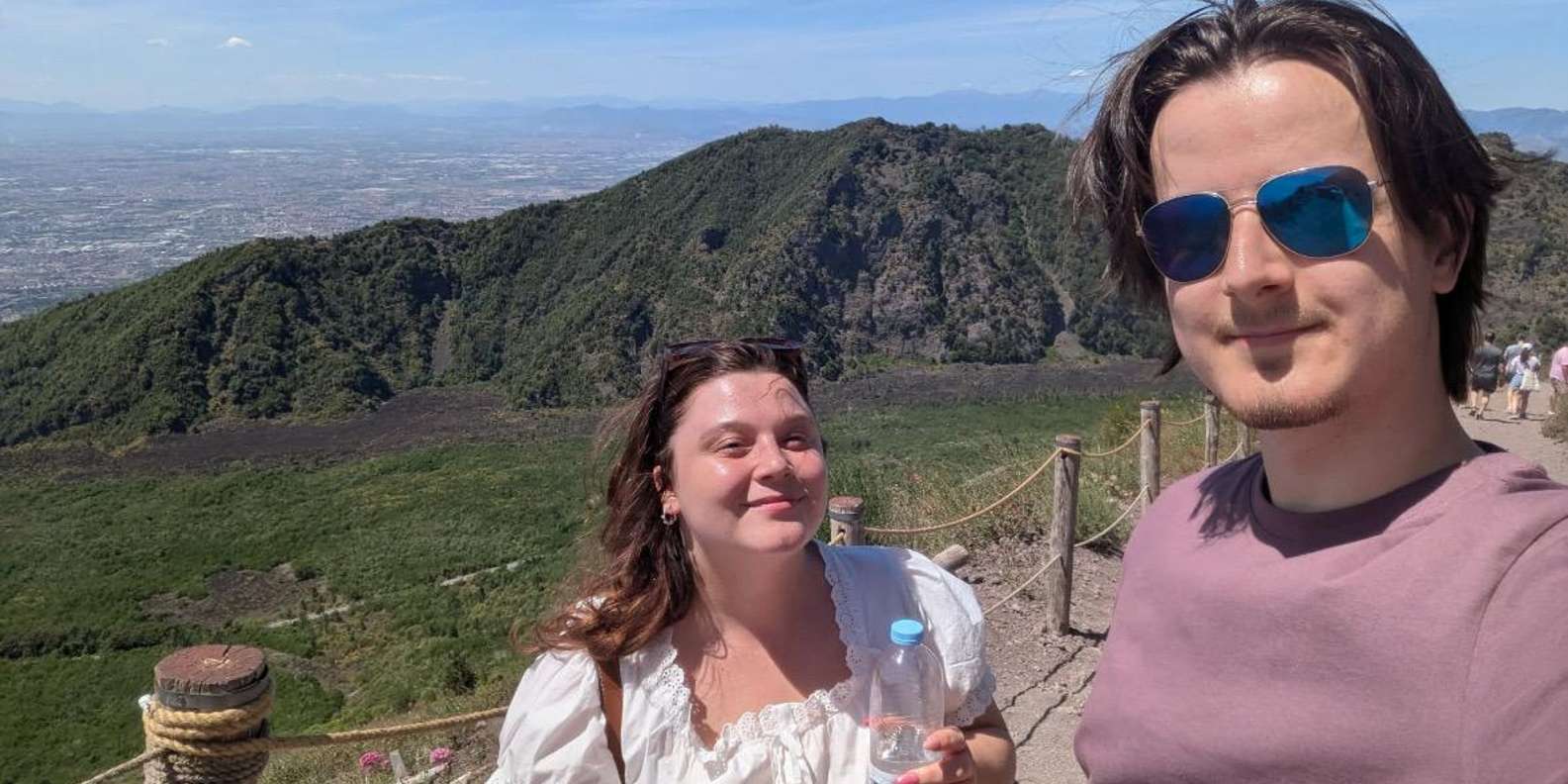
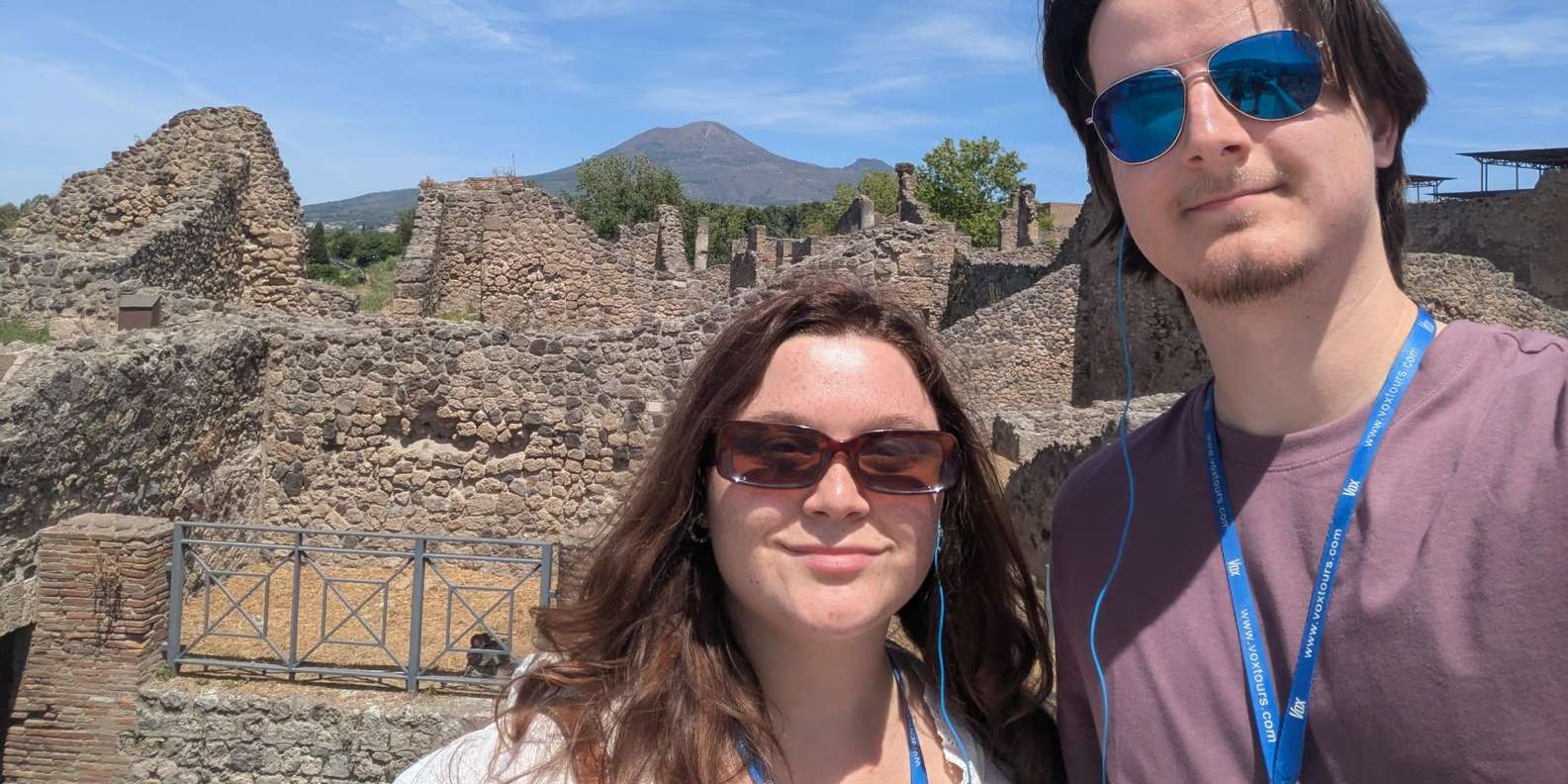
"We had an amazing time with Alessia and Pasquale. The Pompeii tour was brilliant and thorough. Alessia made the trip so much fun even though the weather wasn’t. While we weren’t able to go up the volcano due to the weather, they made sure we had a fun surprise alternative. Would definitely recommend.!"
"Alessia and Roberto were amazing! Alessia was very fun, enthusiastic, and easy to understand, giving great direction throughout. Our Pompeii guide Frederica was also great! Everything was very smooth and well organized and lunch exceeded expectations. We stayed on schedule and were back just before 5:00, which was very important for us as we had to reboard our cruise ship. Thank you for everything 10/10"
"An excellent tour. Martina was our incredible host for the day. The hike up Vesuvius gave amazing views of the Bay of Naples and, of course, inside the crater. A nice surprise on our way to Pompeii was a brief stop for a limoncello sampling. We were greeted with a local tour guide in Pompeii who shared great stories about the city and its history. Overall, the day was a history lesson you'll never match in a classroom. Would recommend 10/10."
"Most amazing day trip! Was picked up by our guides (nicalo) at 10 & began our journey to Pompeii where we had a 2 hour guided tour by a lady (I cannot remember her name). She was amazing however, very informative & helpful. After this we headed to get lunch. We were able to get a pizza & a drink, included in the ticket. The food was beautiful!! After lunch, we drove most of the way up Vesuvius. We were given an 1hr 40m to enjoy. We were able to walk up the rest of the volcano to the crater. Absolutely beautiful! Lastly we were taken to a small family run shop, tried some of their hand crafted drinks & chocolate. So fun! We were dropped back off by around 5pm! Absolutely would recommend, had a blast. Was very helpful having transport & guided tours. My only negative is that I’d have liked to spend a lot longer in Pompeii! I didn’t realise how large it was & felt I missed out on a little bit."
"I really appreciate the enthusiasme and kindness of Melania, our guide, it was really nicely done tour. Happy as well with Nello, our driver, who was driving effectively but with caution and was really nice."
Read all 7969 verified reviews
See All ReviewsBook Before the Crater Slot Goes
Pompeii runs on named, timed tickets and the Vesuvius crater path sells its own timed slot, so a day that needs both books out early. This is the cheapest full day in the pool — air-conditioned coach from Piazza Garibaldi, a guide at each site, pizza lunch, and both entry tickets including the €11.68 Vesuvius park fee. Rated 4.8/5 by 7,969 verified guests, with free cancellation up to 24 hours before. Starting from $61 per person.
Check Availability & BookCan't Make These Dates?
Browse More Available Options
Find a tour that fits your schedule — all with instant confirmation and free cancellation.
Pompeii and Vesuvius: The Questions People Actually Ask
Taken verbatim from Google's own People Also Ask box, and answered with the parks' published rules rather than with guesses.
Yes — 22 of the 25 tours in our data do exactly that, from $61.41 out of Naples. The constraint is not distance: the two sites are about 30 minutes of road apart. It is that they run on two separate timed tickets. Pompeii admits you on a named ticket in one of two daily windows; Vesuvius admits 60 people per 10-minute crater slot, sold online only. Outside July and August the crater path stops admitting before Pompeii does, so the volcano is the half that runs out of day first.
On review depth it is not close. The $61.41 full-day coach from Piazza Garibaldi carries 4.8/5 from 7,969 verified guests — more than double any rival in the niche — and includes both entry tickets, a guide at each site and a pizza lunch. If you want a smaller group, a sit-down lunch, or a genuine choice between the crater rim and a lava-cave trek, the $90.18 small-group day is the upgrade. The full Naples ladder, cheapest to dearest, is on our from-Naples page.
About 30 minutes by road — that is the figure the tour itineraries use consistently, and the coach takes you to the Piazzale di Quota 1000, where the road ends and the trail begins. By public transport it is longer: EAV's bus 808 runs from Pompei (Piazza Anfiteatro or Villa dei Misteri) to the Vesuvio Quota 1000 terminus in roughly 55 minutes for €3.10, bought on board, with about ten return runs a day. Add the crater walk itself on top of either figure.
Yes — the park lists eight locations. The Piazza Anfiteatro, Porta Marina and Piazza Esedra entrances; the Quadriportico by the theatres; the Casina dell'Aquila restaurant; the Antiquarium; Villa dei Misteri; and a point just below the Temple of Venus. There are also three baby-changing stations, on Via dell'Abbondanza, Via di Nola and the Via Stabiana corner. The park confirms many free drinking fountains inside the site but publishes no count. Vesuvius is the opposite: the Quota 1000 trailhead currently has no public toilets at all.
For the view over the Bay of Naples and a look down into a live crater, yes — and it is short: 4,010 metres there and back on the park's own trail sheet. What you should not expect is drama. Vesuvius has not erupted since 1944, the INGV alert level is green, and there is no lava and no glow — only fumaroles on the crater walls. Bear in mind too that the rim on the northern and eastern side is legally closed to the public, so you walk a partial arc rather than a circuit.
Two hours is what almost every combined tour allocates, and it maps neatly onto the park's own shortest published itinerary — Path 1, Porta Marina to Piazza Esedra, two hours, taking in the Suburban Baths, the Sanctuary of Apollo, the Forum, the Forum Baths, the House of the Tragic Poet, the House of the Faun and the Macellum. So it is a real route rather than a rushed one. It is also roughly a fifth of what the site can absorb — the park's longest published path runs seven hours — and reviewers say so constantly and cheerfully.
On your own, yes — but book the crater slot first and build the day around it. Vesuvius sells online only, in 10-minute slots capped at 60 people, released 30 days ahead, and since 20 July 2026 a quarter of every slot is reserved to accredited tour operators. Pompeii's 20,000 daily admissions are named, non-transferable and split 15,000 in the morning window against 5,000 in the afternoon one. Get the Vesuvius time, then the Pompeii ticket, then work out the transport — not the other way round.
Yes, once and famously. On 9 July 2022 a 23-year-old American reached the upper crater by a closed route, dropped his phone while taking a selfie, reached after it and slid several metres in. Park guides spotted him from the opposite rim and one was lowered about 15 metres by rope to haul him out; the guides said he would otherwise have fallen more than 300 metres. He escaped with abrasions and was reported to the Carabinieri for trespass along with three relatives. It happened off the ticketed path, not on it.
It is worth it if you know what you are buying: roughly 175 metres of climb on loose ash and lapilli to a rim at 1,175 m, a partial arc of the crater, and one of the great views in Italy. It is not worth it if you are expecting a summit conquest — the road delivers you to 1,000 m and does most of the work, and the true 1,281 m summit sits on the closed section of rim. Bundled with Pompeii it costs you €11.68 and about ninety minutes of the day.
Yes, and most people do. The park's published wording is a recommendation to calzare scarpe adeguate — wear adequate shoes — and despite what you may read elsewhere, we could find no written rule anywhere refusing sandals, flip-flops or heels. What matters is the surface: unpaved volcanic gravel, loose and slippery in places, rougher on the upper section past the Capannuccia. Trainers with grip are fine; smooth soles are not. One guest warned that whatever you wear on it gets very dirty.
Structurally, yes. A park guide from the Presidio Permanente Vulcano Vesuvio accompanies every group of twenty — that escort is compulsory above 1,000 metres under Campania regional law and is already inside the ticket price — and the park keeps a standing first-aid presence with an ambulance at the crater. Groups keep to the right in both directions, and ascending walkers have right of way at narrow passages. The one documented fall in recent years happened on a closed route, away from the ticketed path.
No visible lava, and no glow. Vesuvius last erupted between 18 March and 7 April 1944 and has been quiescent, with an obstructed conduit, ever since. The INGV alert level is green. What you can see are fumaroles on the crater walls, monitored continuously by the Osservatorio Vesuviano; its June 2026 bulletin recorded 79 small earthquakes with a maximum magnitude of 2.2. The most dangerous volcano framing you will read is about the roughly 600,000 people living in the red zone, not about current activity.
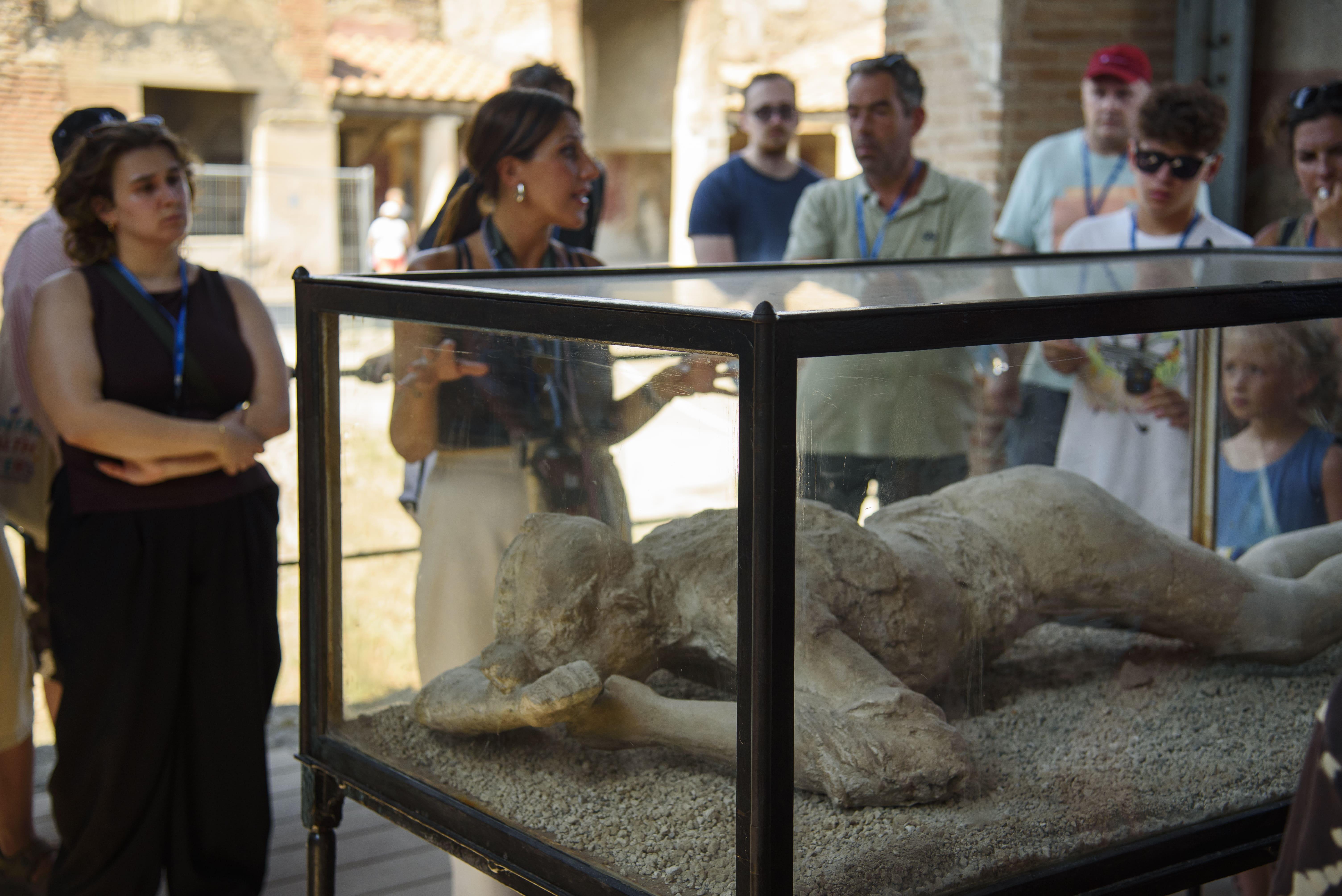
The casts are not bodies. When the eruption buried the city, decomposing remains left cavities in the hardened ash; from 1863 those cavities were filled with plaster, so what you are looking at is the shape a person left behind rather than the person. Since 12 March 2026 there has been a permanent exhibition of 22 casts in the porticoes of the Palestra Grande — the first display to set out how they were made, what they are and what they are not. It is the most affecting thing at either site.
The park rates Sentiero n. 5 "Bassa" — low difficulty — at 4,010 metres return and two and a half hours. One operator puts the ascent more usefully: about a mile, uphill at a 14-degree angle, roughly 20 minutes, on soft ground. The vertical gain from the gate at 1,000 m to the rim at 1,175 m is about 175 metres. The difficulty is underfoot rather than in the height: loose lapilli, no shade at all, and a track that the park says gets rougher on the upper section.
In ten months of the year, Vesuvius — because the crater path stops admitting before Pompeii does. Its last admission is 15:00 in winter, 16:00 in March and October, and 17:00 from April to June and in September, against Pompeii's 15:30 or 17:30. Only in July and August does Pompeii close first, at 17:30 to the crater's 18:00. Most tours still run Pompeii first, because Pompeii holds 15,000 of its 20,000 daily admissions before 13:00 — so a morning slot is easier to get.
A combined tour runs about eight to nine hours door to door from Naples, and roughly twelve from Rome. Inside that, the operators allocate two to two and a half hours at Pompeii and 80 to 120 minutes for the entire Vesuvius stop, of which the walk is most. Pompeii's own guidance is a minimum of two to three hours, and it publishes routes running to seven. The volcano is genuinely done in ninety minutes; Pompeii never is — which is the honest asymmetry at the heart of this day.
To see Pompeii, no. To see a coherent slice of it, yes. The park publishes four numbered itineraries — two, three, five and seven hours — and two hours buys you the first of them: in at Porta Marina, past the Suburban Baths and the Antiquarium to the Forum and the Temple of Jupiter, then the Forum Baths, the House of the Tragic Poet, the House of the Faun and the Macellum, out at Piazza Esedra. That is the standard guided route on a combined day, and it is a good one.
The park's own answer is a minimum of two to three hours, and its four published routes run 2, 3, 5 and 7 hours. Three is the honest sweet spot for a first visit — enough for the Forum quarter, the baths, the main houses and a look at the Amphitheatre end without marching. If you want the suburban villas as well you need the €25 Pompei+ ticket and most of a day, and last entry at the Porta Ercolano gate for that route is 15:30 in winter and 17:30 in summer.
Four hours sits between the park's three-hour and five-hour published routes, so yes — comfortably enough for the Forum quarter plus the Via dell'Abbondanza and the Amphitheatre, which is what the five-hour Path 3 covers between Porta Marina and Piazza Anfiteatro. One caveat that catches people out: individual houses close before the site does, typically at 18:00 in summer against the site's 19:00, so a late-afternoon four hours buys you noticeably less than a morning four hours.
Four, not one. The 79 AD eruption buried Pompeii and Herculaneum, and also Oplontis at modern Torre Annunziata and Stabiae near Castellammare, plus the working farm at Boscoreale. Pompeii was covered by falling pumice and ash; Herculaneum was hit by pyroclastic surges, which is why it kept its upper storeys, carbonised timber and wooden furniture. If it is that contrast you are after rather than the volcano, our sister site covers the Pompeii and Herculaneum combination.
Still have questions? Email us at info@pompeiiandvesuviustour.com